
fCyber Monday scams in 2025 are increasing at a time when phishing, credential theft, and financial cybercrime are already at some of the highest levels seen this year. Attackers know shoppers are distracted by discounts and rushed checkout decisions, and they are using this moment to launch more convincing scams than ever.
In November, the National Cyber Security Centre (NCSC) warned that phishing emails are becoming extremely realistic. One recent example involved emails pretending to be from the Canton of Zurich. The messages copied the government’s logo, layout, and tone, pressuring people to update information for “new cryptocurrency tax rules.” Victims were taken to a fake website that looked exactly like the real portal. After entering personal and financial details, they were redirected to the genuine website, so nothing felt suspicious.
This pattern isn’t limited to Europe. Microsoft’s Digital Defense Report 2025 found that 52% of cyberattacks are now financially motivated, while only 4% relate to espionage. The report shows attackers are more focused on quick money, data theft, and extortion than anything else.
Japan has also seen a spike. The Financial Services Agency reported nearly USD 700 million in unauthorized trades since March, after cybercriminals stole login details from fake securities websites and infostealer malware. Attackers then sent follow-up phishing emails pretending to be regulators to lure victims again, showing how far they go to keep the scam going.
With these global trends already in motion, Cyber Monday scams in 2025 are expected to hit even harder, using fake deals, phishing emails, and fraudulent apps to trick shoppers during the busiest online shopping week of the year.
Fake Deals: The Most Common Cyber Monday Scam
Fake deals continue to be one of the biggest Cyber Monday scams. Criminals create websites that look identical to popular shopping platforms. These fake pages advertise impossible discounts and use professional product images to appear genuine.
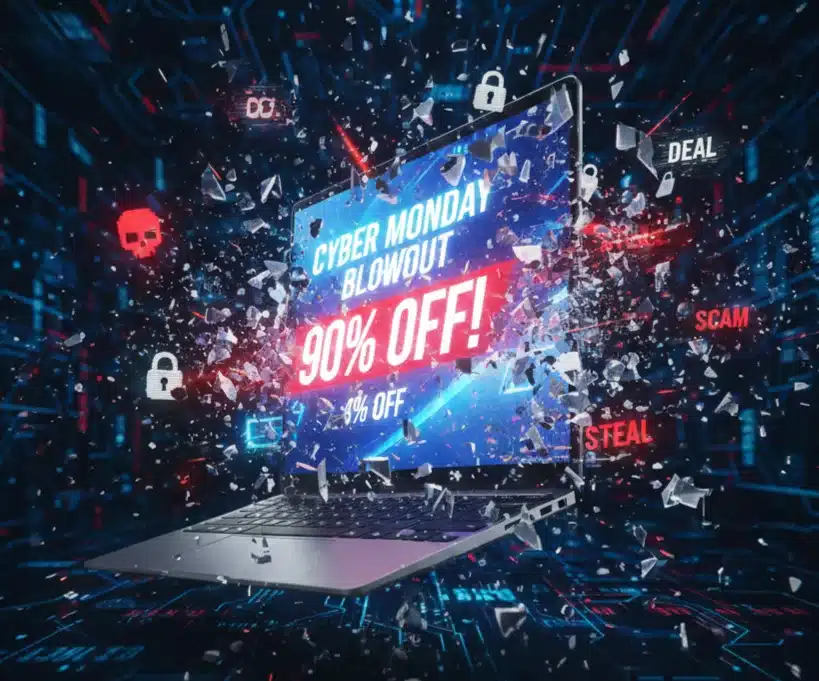
This year, attackers are using:
- Paid ads to push fake “Cyber Monday” offers
- AI-generated product photos
- Fake customer support chatboxes
- Websites designed to collect card details and passwords
Many of these sites even send fake confirmation emails to make the purchase look real.
Phishing Emails Designed for Holiday Shoppers
Phishing emails increase sharply during Cyber Monday week because shoppers expect order updates, delivery alerts, and discount codes. Attackers take advantage of this by sending emails that look like they’re from Amazon, courier services, or major retailers.
Common tactics include:
- “Your order has been delayed” links
- Payment failure warnings
- Early-access Cyber Monday discounts
- QR codes leading to fake login pages
These messages often use the correct logos and a domain name that looks almost identical to the real brand, making them harder to notice.
Fake Mobile Apps Posing as Shopping Tools
Another growing Cyber Monday scam involves fake mobile apps disguised as coupon apps, cashback tools, or sale trackers. Once installed, these apps can access personal details and intercept OTPs.
Some harmful apps can:
- Read text messages
- Capture saved card information
- Monitor keystrokes
- Send fake push notifications
Security researchers have also found fake apps pretending to be BNPL (Buy Now Pay Later) services, which become very active during Cyber Monday sales.
AI-Powered Social Media Scams
Social media is now one of the biggest sources of Cyber Monday scams. Attackers use AI to create fake influencer posts, discount videos, and promotional codes that link to malicious websites.
These scams spread quickly because criminals use thousands of fake likes and comments to make the posts look trustworthy.
Even after Cyber Monday ends, the impact continues. Stolen passwords and card details are used for:
- Account takeovers
- Unauthorized purchases
- Reward points theft
- Identity fraud
Cybercriminals also test stolen password combinations across multiple websites, knowing many people reuse the same credentials.
How Shoppers Can Stay Safe
Following are the recommendations to avoid Cyber Monday scams in 2025. These easy habits help reduce risk during the holiday shopping rush.
- Double-check website URLs
- Avoid deals sent only through social media DMs
- Download apps only from official stores
- Turn on two-factor authentication
- Be careful with QR codes in emails
- Never enter card details on unfamiliar sites
Cyber Monday scams in 2025 are becoming harder to spot as criminals use fake deals, phishing emails, and fraudulent apps to target busy shoppers. With global phishing incidents rising and financial cybercrime at record highs, staying alert is the best way to shop safely this season.