
In a brazen attempt to exploit the chaotic pre-holiday rush, Microsoft Security has detected and dismantled a large-scale phishing campaign launched on Thanksgiving Eve.
The attack, orchestrated by a threat actor tracked as Storm-0900, flooded inboxes across the United States with tens of thousands of malicious emails designed to panic or trick recipients into clicking compromised links.
The campaign, which began spiking on November 26, specifically weaponized the distractions associated with the Thanksgiving holiday.
By leveraging themes of urgent parking violations and time-sensitive medical results, the attackers aimed to catch users off-guard during a period when many are wrapping up work, traveling, or preparing for family gatherings.
Anatomy of the Lures
Analysis of the intercepted emails reveals a sophisticated bifurcated strategy targeting both personal anxiety and administrative urgency.
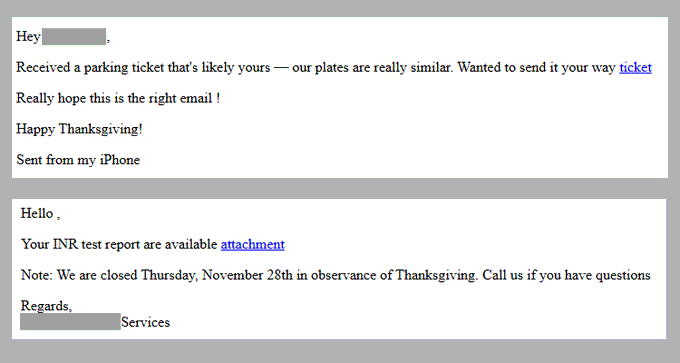
One variation of the attack posed as a friendly but concerned neighbor. The email, subject-lined with casual urgency, claimed the sender had found a parking ticket on their car that likely belonged to the recipient.
“Received a parking ticket that’s likely yours our plates are really similar,” the message read. It included a malicious link labeled “ticket” and ended with a disarming “Happy Thanksgiving! Sent from my iPhone.”
This “neighbor spoofing” tactic relies on social pressure; the recipient feels compelled to resolve a potential misunderstanding with a neighbor and avoid a fine, lowering their skepticism.
The second variation adopted a more formal, institutional tone. Masquerading as a medical service provider, these emails informed recipients that their “INR test report” was available via an attached link.
To increase the pressure to click immediately, the message noted, “We are closed Thursday, November 28 in observance of Thanksgiving,” implying that failing to check the result now would result in a long delay over the holiday weekend.
INR tests (International Normalized Ratio) measure how long it takes blood to clot and are critical for patients on blood thinners, making this lure particularly predatory towards vulnerable individuals worried about their health.
Security analysts note that the timing of the Storm-0900 campaign was not accidental. “Thanksgiving Eve is historically a high-traffic period for digital communication,” said a cybersecurity researcher familiar with the attack.
“People are distracted, checking emails on mobile devices while traveling, and are psychologically primed to clear their ‘to-do’ lists before the holiday break.
Attackers know that a message about a parking fine or a medical result is likely to trigger an immediate, emotional click response.”
Mitigations
Microsoft’s defensive systems successfully identified the surge in traffic and disrupted the campaign in real-time. According to a statement from the tech giant, the mitigation involved a multi-layered defense strategy:
- Email Filtering: The specific linguistic patterns and sender reputations were flagged, resulting in thousands of these emails being sent directly to quarantine.
- Endpoint Protection: Microsoft Defender systems were updated to recognize the malicious payloads associated with the links.
- Infrastructure Takedown: Microsoft leveraged threat intelligence to preemptively block the attacker’s command-and-control infrastructure, effectively severing the link between the victims and the hackers.
While this specific wave has been neutralized, experts warn that Storm-0900 remains active. Users are advised to stay vigilant against unsolicited emails that demand immediate action or offer unexpected links, especially those using “sent from my mobile device” signatures to excuse poor formatting or brevity.
Follow us on Google News, LinkedIn, and X to Get Instant Updates and Set GBH as a Preferred Source in Google.