
Verizon has begun sending text messages with instructions on how to redeem a $20 account credit for last week’s nationwide wireless outage.
The message states that the $20 credit is intended to cover multiple days of service and apologizes for the outage.
“Valued Verizon Customer – We let you down this week. For that we are truly sorry. We would like to extend you a $20 account credit that can be easily redeemed via the link below,” reads the Verizon text message.

“On average, this covers multiple days of service. This credit isn’t meant to make up for what happened. But it’s a way of acknowledging your time and showing that this matters to us.”
The text message also tells customers who are still experiencing connectivity issues to restart their devices and includes a link to access the credit.
To apply the credit, customers must complete the following steps:
- Log in to their Verizon.com account.
- Click the “Take action” button under “Mobile”, which should display a red notification indicator.
- Click the “Redeem Now” button to apply the credit to your account.
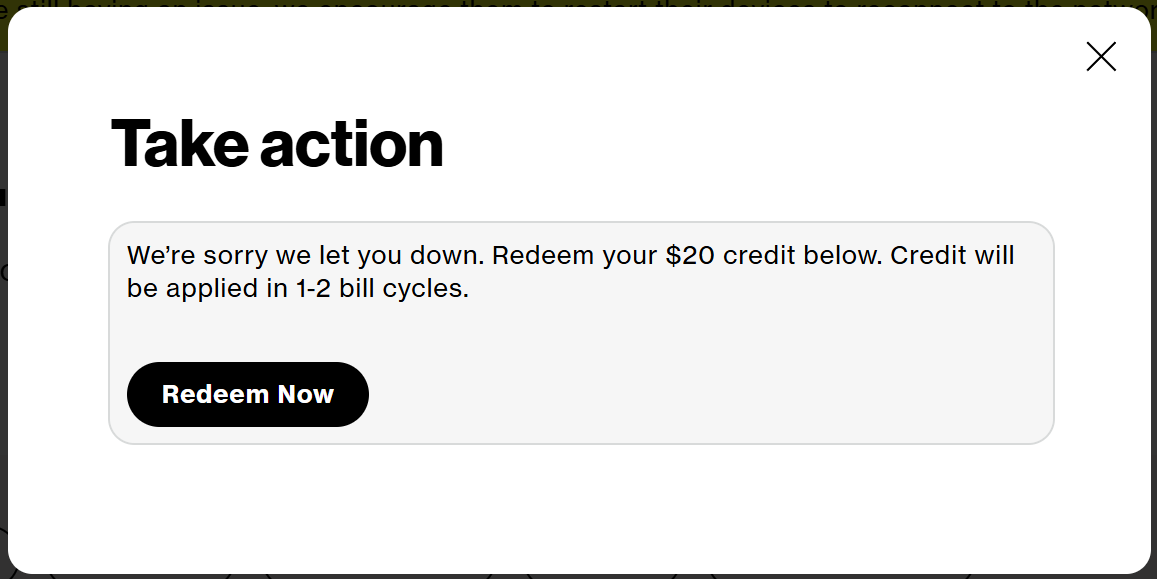
Source: JayT
Verizon is issuing one $20 credit per account, regardless of the number of lines associated with the account. Customers say the text message is being sent only to the primary account holder’s phone number.
The outage occurred on January 14, when Verizon customers across the United States reported loss of cellular service around 12 PM ET. Many of the affected users had their phones stuck in SOS mode for the duration of the outage, preventing normal voice calls and data access.
Verizon acknowledged the incident and said engineers were working to identify and resolve the issue. At 10:20 PM ET that night, the company confirmed the outage had been resolved and advised customers to restart their devices to reconnect to the network.
Verizon previously said the outage was caused by a software issue and stated that there is no indication it was the result of a cybersecurity incident.
However, the company has not provided further technical details or explained what systems were affected.
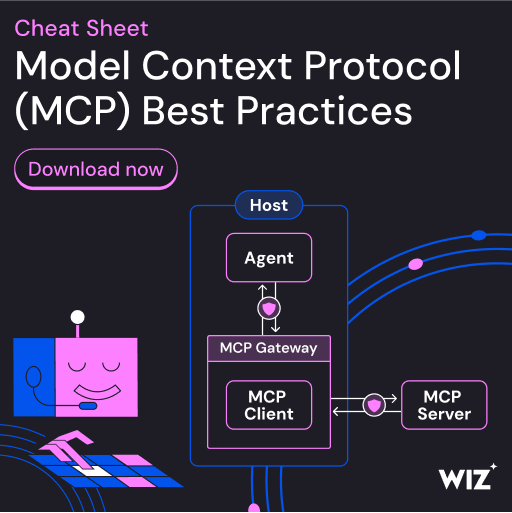
As MCP (Model Context Protocol) becomes the standard for connecting LLMs to tools and data, security teams are moving fast to keep these new services safe.
This free cheat sheet outlines 7 best practices you can start using today.