Threat Actors Using Fake Google Forms Site to Harvest Google Logins
A new phishing campaign in which threat actors are using a convincing fake version of Google Forms to steal Google account credentials. Cybercriminals are once…
Hackers are increasingly abusing emoji and other Unicode tricks to hide malicious code, bypass filters, and evade modern security controls, including AI-powered defenses. This emerging technique, known…
Cryptojacking, the unauthorized use of a victim’s computing resources to mine cryptocurrency, has transitioned from a browser-based nuisance (typified by Coinhive scripts) to a system-level…
OpenAI has collaborated with crypto investment firm Paradigm to release EVMbench, a new benchmark designed to evaluate how artificial intelligence agents interact with smart contract…
DigitStealer’s expanding command-and-control (C2) footprint is exposing more of its backend than its operators likely intended, giving defenders fresh opportunities to track and block new…
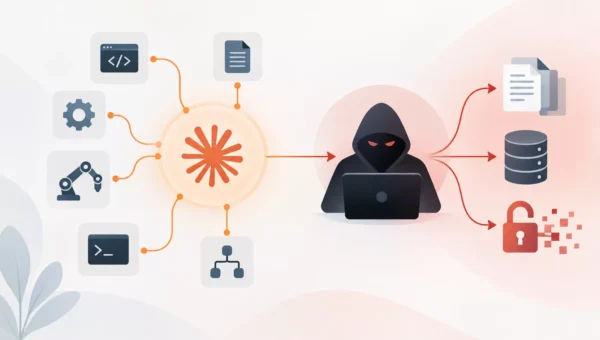
MCP servers can silently turn AI assistants into powerful attack platforms, enabling arbitrary code execution, large‑scale data exfiltration, and stealthy user manipulation across both local…
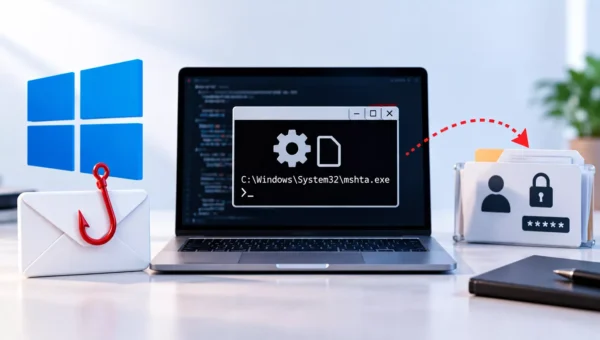
The Cybersecurity and Infrastructure Security Agency (CISA) has officially added a critical vulnerability affecting Microsoft Windows to its Known Exploited Vulnerabilities (KEV) catalog. This specific…
Palo Alto Networks announced on February 17, 2026, that it has entered a definitive agreement to acquire Koi Security, a pioneer in Agentic Endpoint Security.…
A rising wave of cryptocurrency scams sweeping across Asia is blending two major fraud techniques malvertising and pig butchering to create a more deceptive and scalable attack…
OpenClaw, the open-source autonomous AI assistant that has gained widespread adoption in early 2026, released version v2026.2.17 on February 17, 2026, introducing support for Anthropic’s…
Two critical zero-day vulnerabilities in Ivanti Endpoint Manager Mobile (EPMM), tracked as CVE-2026-1281 and CVE-2026-1340, are being actively exploited to compromise enterprise mobile fleets and…
Fake CAPTCHA (ClickFix) pages are enabling threat actors to turn a single user click into an enterprise‑wide compromise, as seen in a recent incident affecting…