Security threats rarely adhere to holiday schedules, and while developers may take time off, malicious actors are working overtime.
A significant new wave of software supply chain attacks has been identified targeting the Microsoft Visual Studio Marketplace and OpenVSX platforms.
Researchers at Secure Annex have uncovered and tracked 24 new malicious packages linked to the “Glassworm” malware campaign, signaling an escalation in how attackers infiltrate developer environments.
Over the past week, security researchers identified an unprecedented cluster of extensions that employ sophisticated deception tactics.
These packages are not novel tools but rather near-identical clones of popular, legitimate extensions used by millions of developers.
The attackers specifically target widely used frameworks and tools, including Flutter, Tailwind, Vim, Yaml, Svelte, React Native, and Vue.
By mimicking tools that act as force multipliers for coding productivity, the attackers are betting on the difficulty developers face in distinguishing between a legitimate utility and a malicious clone in a crowded marketplace.
OpenVSX Registry and Visual Studio
The deception goes beyond simple naming similarities. According to the analysis, once these extensions are published, the attackers artificially manipulate installation metrics.
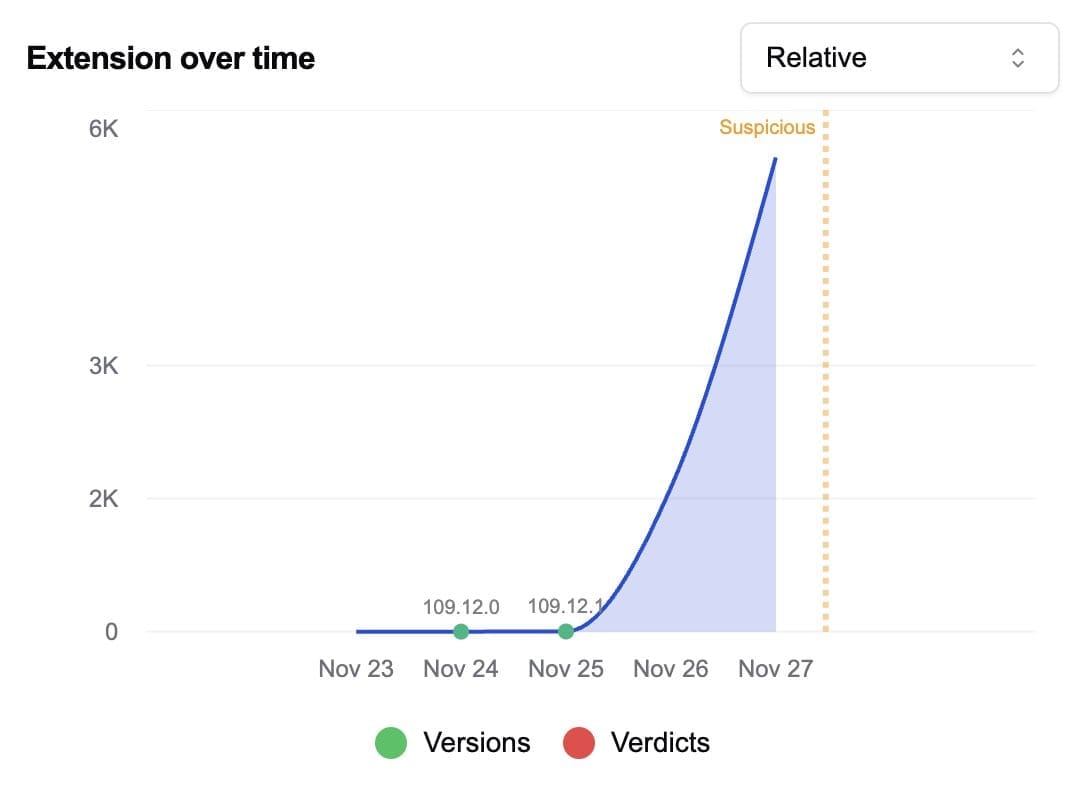
Almost instantly, a new malicious extension can display thousands of downloads, granting it an unearned veneer of trustworthiness.
In the Visual Studio Code user interface, these fraudulent extensions often appear adjacent to their legitimate counterparts.
With manipulated social proof, the difference between a safe installation and a compromised system usually comes down to a single, inadvertent click by a discerning developer.
The technical execution of the Glassworm campaign highlights a worrying evolution in marketplace evasion.
The attackers utilize a “bait and switch” methodology: extensions are often published initially as benign code to pass automated filters. Once approved, they are updated with malicious payloads.
This malicious code is frequently injected immediately after the extension’s activation context, allowing it to slip past initial defenses.
The attack techniques have also evolved, shifting from the use of invisible Unicode characters to more complex Rust-based implants embedded directly within the extension.
Supply-Chain Risks for Developers
This campaign is not an isolated incident but part of a broader trend tracked by multiple security organizations, including Nextron Systems, Koi.ai, and Aikido.
These groups have noted that despite known attack signatures and detection patterns, attackers continue to publish malware to major marketplaces successfully.
The 24 identified packages ranging from iconkieftwo.icon-theme-materiall on the VS Marketplace to vitalik.solidity on Open VSX pose a severe risk.
The persistence of Glassworm suggests that current marketplace scanners are struggling to keep pace with these rapid, iterative evasion techniques.
In response to these findings, Secure Annex has released the Secure Annex Extension Manager, a tool designed to inventory installed extensions and protect users from known threats. However, the immediate advice for engineering teams is vigilance.
Many were found to be staging for attacks or actively containing malware in their most recent updates.
As the Glassworm campaign continues to iterate, developers are urged to audit their installed extensions and rely on verified publishers to secure their coding environments.
Follow us on Google News, LinkedIn, and X to Get Instant Updates and Set GBH as a Preferred Source in Google.