A sophisticated information-stealing tool known as JSCEAL has evolved significantly in recent months, deploying advanced anti-analysis techniques and hardened command-and-control infrastructure to target users of cryptocurrency applications on Windows systems.
Security researchers from Cato CTRL discovered the enhanced malware variant during an active campaign that began in August 2025, marking a substantial shift in the threat actor’s operational capabilities.
JSCEAL, an infostealer initially documented by Check Point Research in July 2025, has been actively targeting cryptocurrency enthusiasts and financial application users.
The malware specializes in harvesting login credentials and sensitive authentication data from infected Windows systems.
What distinguishes the August 2025 campaign from previous variants is the threat actors’ adoption of a completely redesigned infrastructure architecture combined with reinforced anti-detection mechanisms.
The transition from the legacy campaign to the new variant reveals deliberate operational planning by threat actors.
In the first half of 2025, JSCEAL relied on multi-word, hyphenated C2 domain names such as “download-app-windows[.]com” with consistent .com top-level domains.
Beginning August 20, 2025, operators deployed an entirely new infrastructure strategy utilizing single-word domain names like “emberstolight[.]com” with diverse TLDs including .org, .link, and .net.
Bulk registration of these domains at regular intervals suggests an automated provisioning workflow designed for scalability and evasion.
Advanced Anti-Analysis Safeguards
The updated JSCEAL implementation incorporates multiple layers of security bypassing and anti-analysis controls that complicate traditional threat detection methods.
The infrastructure implements strict access control filtering that returns HTTP 404 responses to any requests lacking a PowerShell User-Agent header, effectively preventing analysis via standard browsers or sandbox environments.
When legitimate PowerShell requests arrive, the server responds with a fake PDF file rather than delivering the actual payload immediately.
This multi-stage payload retrieval approach creates an additional validation layer. The malware script verifies PDF delivery before proceeding to request the “/script” endpoint, where the operational payload actually resides.
This deliberate staging increases infection chain stealth and hinders automated security analysis.
The PowerShell script has been significantly refactored to improve both functionality and evasion capabilities.
The new version replaces hardcoded scheduled task implementations with COM object interactions for Windows Task Scheduler, providing greater flexibility and reduced static indicators.
Additionally, the loader now supports multiple payload content types including raw bytes, JSON, and MIME formats, enabling operators to adapt payloads dynamically.
Earlier variants contained multiple hardcoded domains; the August 2025 campaign simplified this to reference a single hardcoded domain, making the loader substantially more challenging to fingerprint using traditional static analysis techniques.
Detection and Protection
Despite its sophisticated evasion techniques, JSCEAL’s reliance on PowerShell communication with hardcoded C2 domains left detectable patterns.
Organizations protected by the Cato SASE Cloud Platform benefit from automatic threat detection and blocking mechanisms.
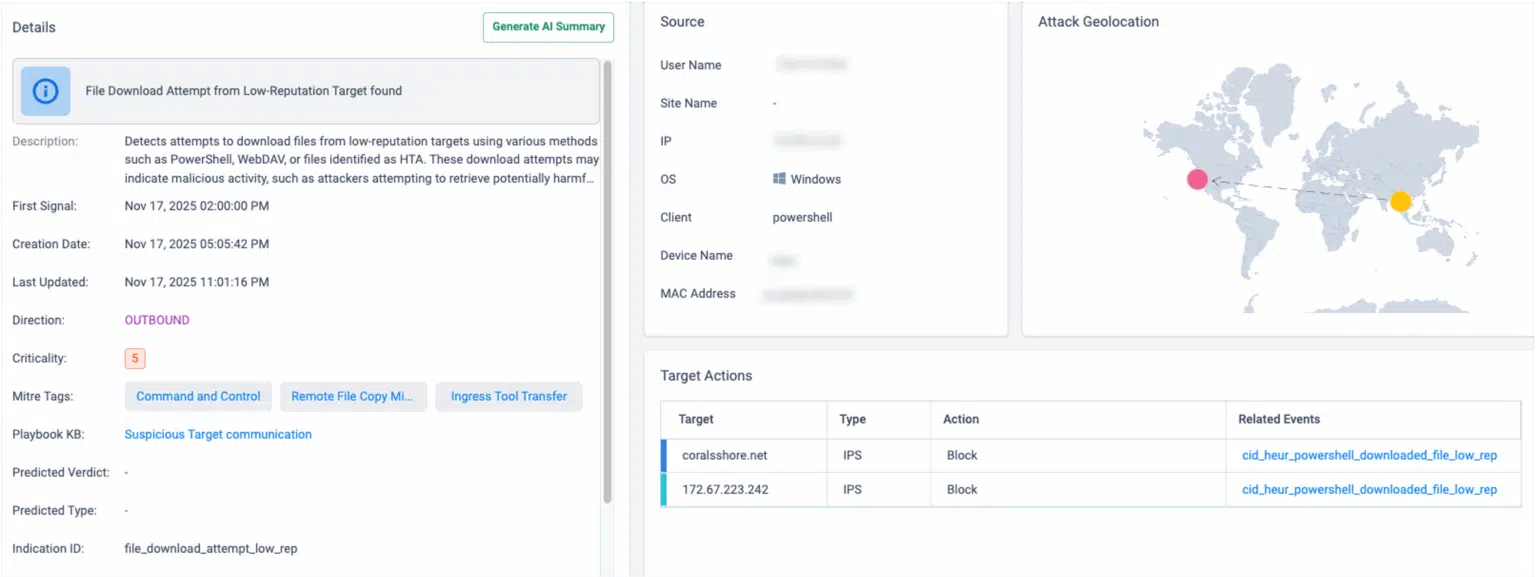
Cato’s security infrastructure identifies domain patterns, staged PDF validation routines, and PowerShell-based C2 communication, preventing payload execution before the malware can establish persistence.
JSCEAL’s August 2025 evolution demonstrates that modern malware threats succeed not through dramatic exploits but through incremental refinement of evasion techniques.
The sophisticated infrastructure, layered access controls, and hardened loader design reflect mature operational security practices.
Organizations must implement defense strategies emphasizing behavioral detection, network visibility, and cloud-based threat prevention to counter these evolving information stealers effectively.
Follow us on Google News, LinkedIn, and X to Get Instant Updates and Set GBH as a Preferred Source in Google.