
It’s definitely one of the most frustrating things that we all can relate to when we try to watch recorded videos and find them blurred, dull, or noisy. Any phone, a webcam, or an old camera can be your filming device, but the outcome of the new videos won’t necessarily be a perfect shot.
These days, when consumers demand high-resolution 4K videos, any inferior-quality content can kill the engagement and the length of the audience.
For this reason, a great number of creators in 2025 opt for AI video enhancers. Such tools automatically sharpen the video, increase the resolution, reduce grain, recover lost detail, and even out the color without the need for a skilled user.
Let’s learn about the best AI video enhancers that you must try.
Part 1: What Is an AI Video Enhancer and How Does It Work?
An AI video enhancer is a clever instrument that increases the quality of videos automatically by the use of machine learning. Without the need for a human to adjust the exposure, sharpness, or noise, the program looks at each frame and makes the changes that fit best according to what it finds.
Most AI enhancers focus on:
- Noise and grain reduction
- Sharpening details and textures
- Upscaling resolution (HD, 4K or higher)
- Color correction and lighting balance
- Frame interpolation for smoother motion
Put simply, it is like a digital restoration assistant that goes about fixing quality issues without making the footage look fake. Whatever the case is, be it old video, low-light clips, or shaky smartphone recordings, AI can help your footage become quite clear in a matter of a few clicks.
Part 2: Key Features to Look For in an AI Video Enhancer
It is good to understand what differentiates one AI video enhancer from another before you decide which one to get. Having the correct features can be a great time saver and can really make a significant difference in the quality of the final video, particularly in the case of old footage or recordings made in low light.
Here are a few features worth paying attention to:
- AI upscaling (HD → 4K): Useful when your original footage isn’t high resolution.
- Noise and grain reduction: Used to make a low-lit or heavily compressed video look cleaner.
- Color correction and detail recovery: Works for color fading and bringing back the lost sharpness.
- Batch or cloud-based processing: Great if you have multiple videos to edit and you want to save time.
- Device compatibility: Desktop, mobile, or web. Choose what fits your workflow.
Having these in mind makes it much easier to find a tool that suits both your content style and editing pace.
Part 3: 10 Best AI Video Enhancers in 2025
AI video enhancement has been evolving rapidly, currently providing a wide range of solutions, from quick social media touch-ups to cinematic restoration and 4K upscaling. In 2025, these are the best AI video enhancers, along with the insights that help you align with your workflow, budget, and creative goals.
- Wondershare Filmora
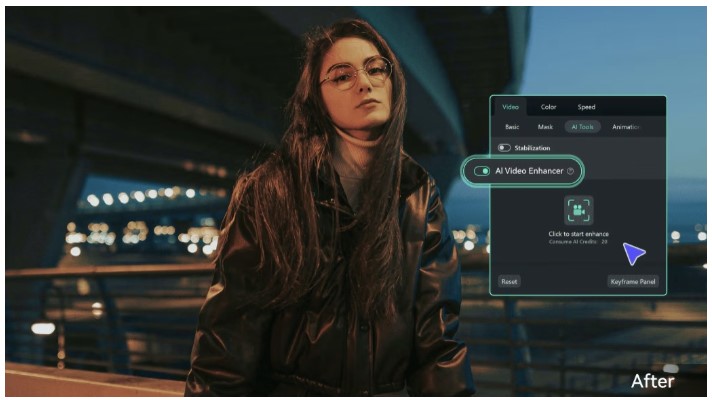
For creators seeking fast, polished results without a steep learning curve, Filmora delivers versatility. Its AI engine automatically enhances clarity, exposure, and sharpness, while real-time previews and adjustable sliders make fine-tuning effortless. Perfect for educators, social content publishers, or beginners.
Quick Filmora Workflow:
- Step 1 – Import Your Footage
Open Filmora, start a new project, and import your video from File → Import Media.
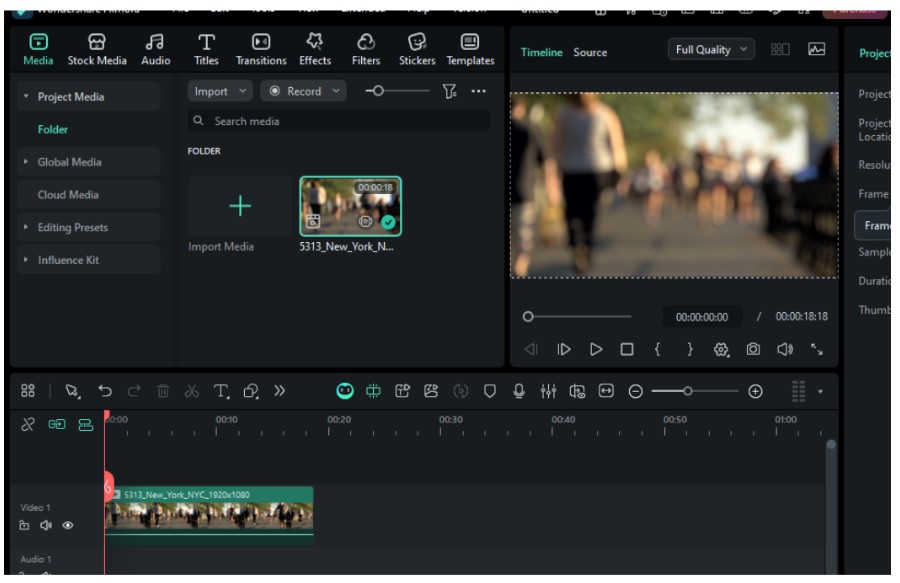
- Step 2 – Apply AI Enhancement
Drag your clip onto the timeline, click to select it, and the property panel will automatically open on the right side. Go to Video > Basic > AI Video Enhancer.
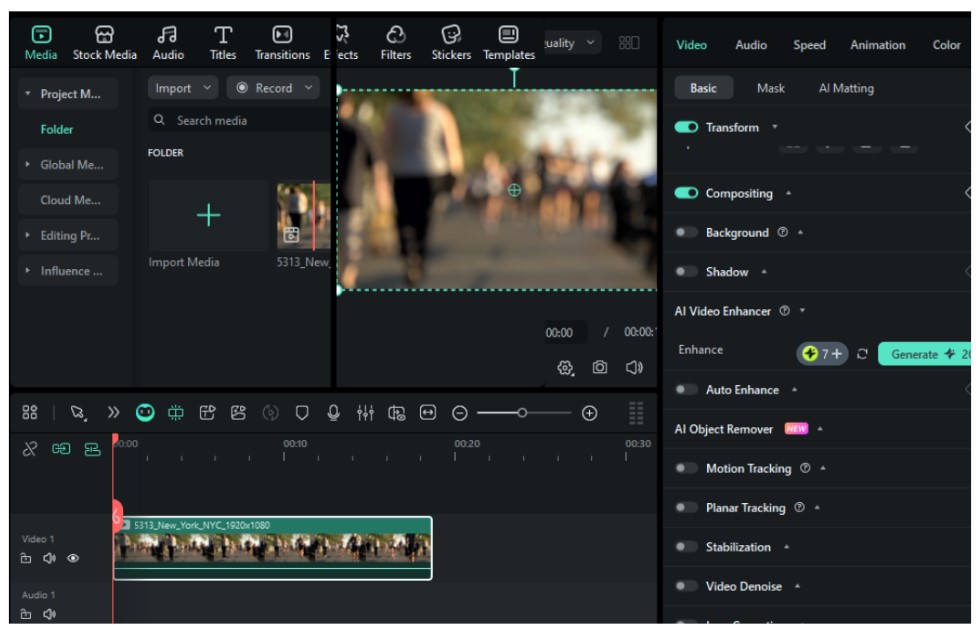
- Step 3 – Automatic Optimization
Turn on the Auto Enhancement feature. Drag the slider to adjust the intensity, then click Generate. Filmora automatically selects the best enhancement method for your hardware. If supported (like RTX 30-series GPUs), it runs locally with no limits. Otherwise, it switches to cloud processing.
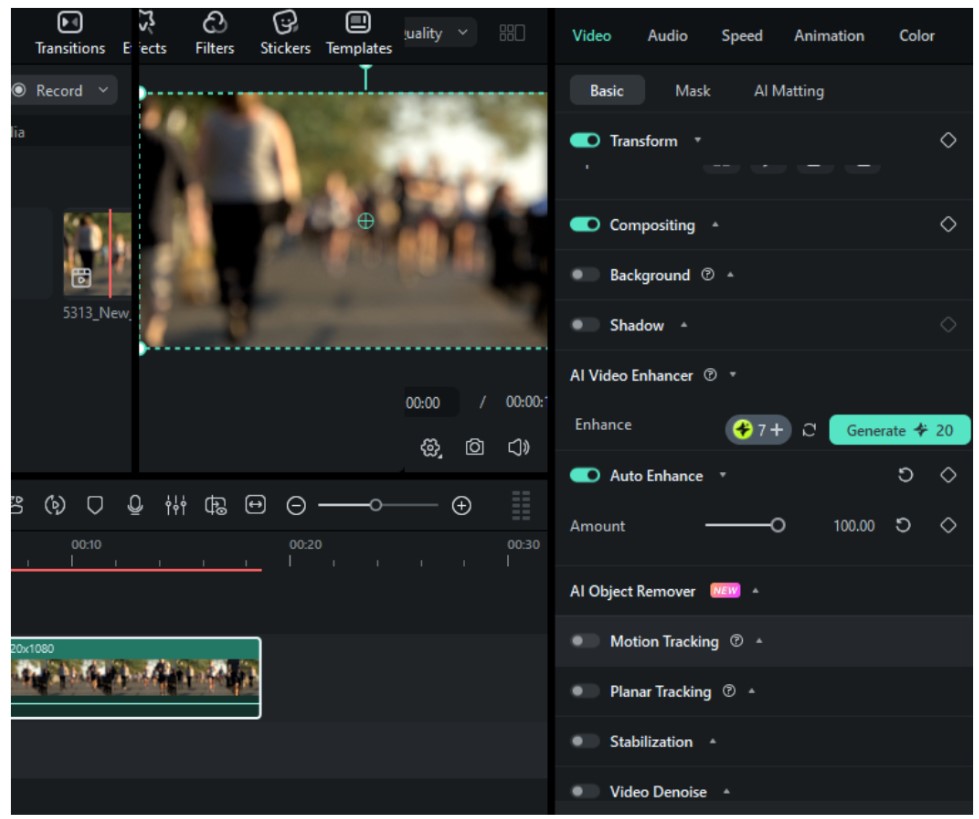
- Step 4 – Preview and Export
Review the enhanced footage in the preview window, make any adjustments, then export your video in high quality up to 4K.
That’s how easy it is to use Filmora AI Video Enhancer. It brings quality results without much effort. Best for beginners and professional editors. This feature has been improved in Filmora V15 to provide better accuracy and faster processing. Filmora’s “What’s New” page lists all optimization updates, while the guide provides a more detailed overview.
- Topaz Video Enhance AI
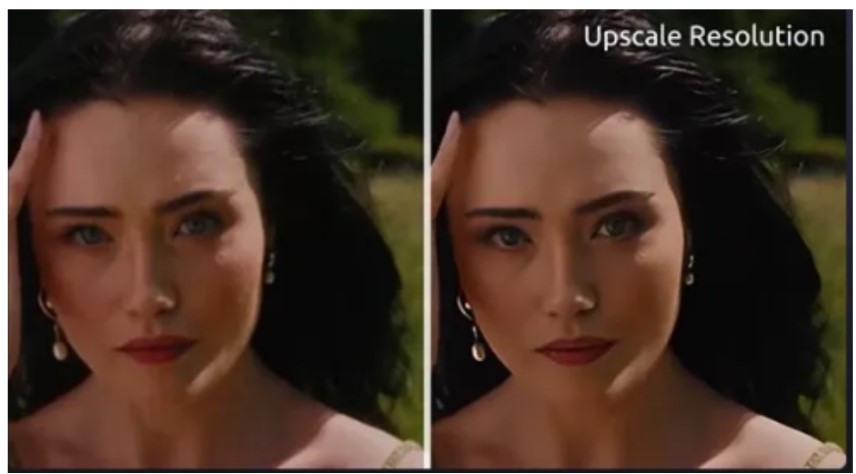
Topaz is the one that really makes a difference when high-resolution upscaling and restoration are needed. It goes deep with learning models that are trained on cinematic data to bring back the finest details, clean up the image from any compression files, and make fabulous 4K or 8K pictures. Although it requires powerful hardware and a bit of waiting, the outcome is really impressive for archival and professional projects.
- HitPaw Video Enhancer
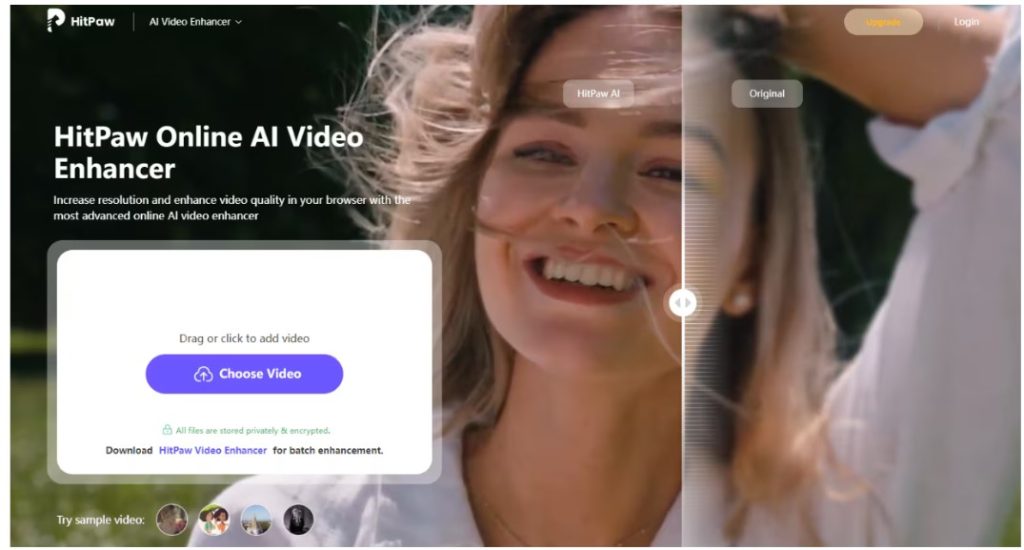
For those prioritizing simplicity and speed, HitPaw offers preset AI modes like Face, General, Anime, and Low-Light. Minimal setup is needed, letting creators improve their videos instantly without learning complex editing workflows.
- Runway ML
Experimental filmmakers and creative studios will appreciate Runway’s toolbox approach. Beyond enhancing lighting and clarity, it offers object removal, generative fill, and motion editing, unlocking more creative possibilities than typical AI enhancers.
- AVCLabs Video Enhancer AI
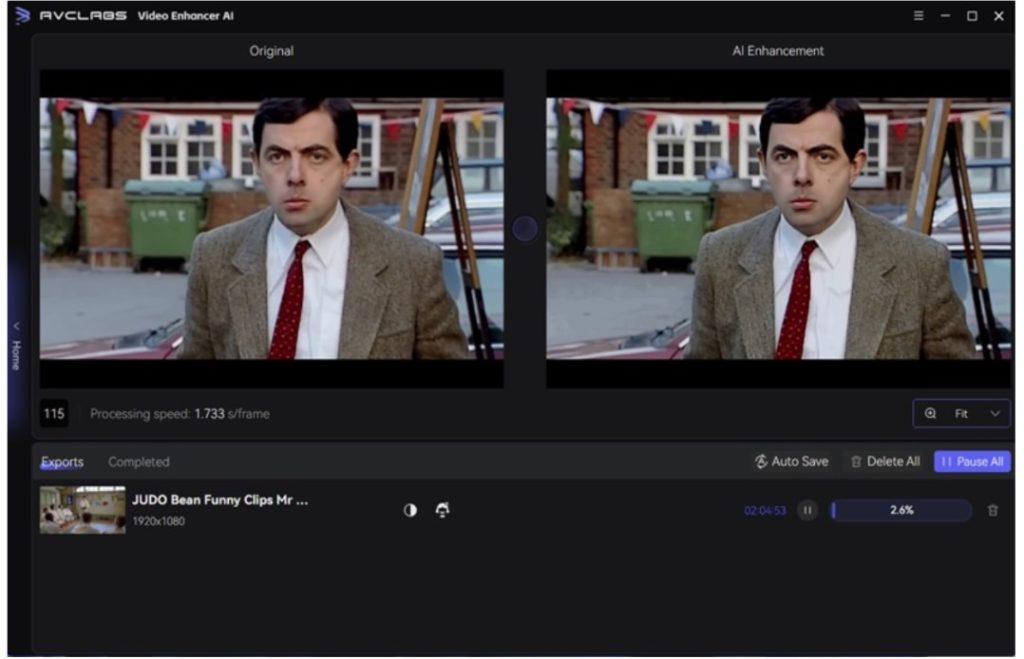
Shaky or dimly lit videos are a challenge, but AVCLabs is a winner in this department. The software enhances the videos by stabilizing, reducing noise, and detailing, especially if the videos are from a handheld camera or an action camera; however, the processing time is a bit longer.
- Pixop
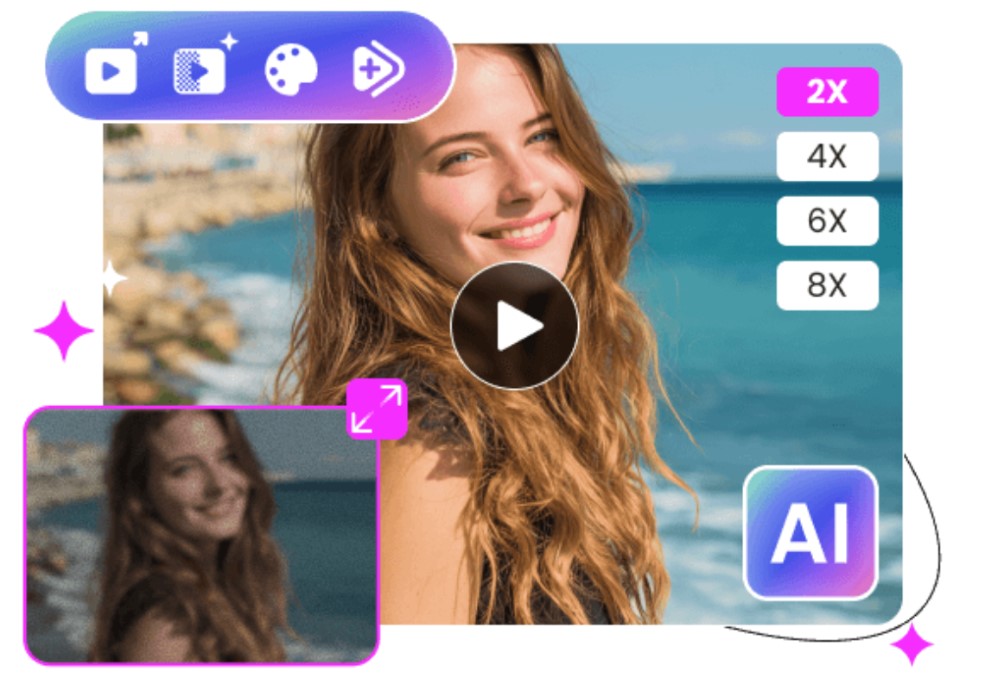
Being a cloud-based and professional-grade tool, Pixop fits the needs of broadcasters, archivists, and documentary teams perfectly. The user does not have to worry about heavy local hardware, as features such as motion-aware deinterlacing and advanced denoising are processed remotely; thus, large-scale workflows are simply facilitated.
- VEED.io AI Enhancer
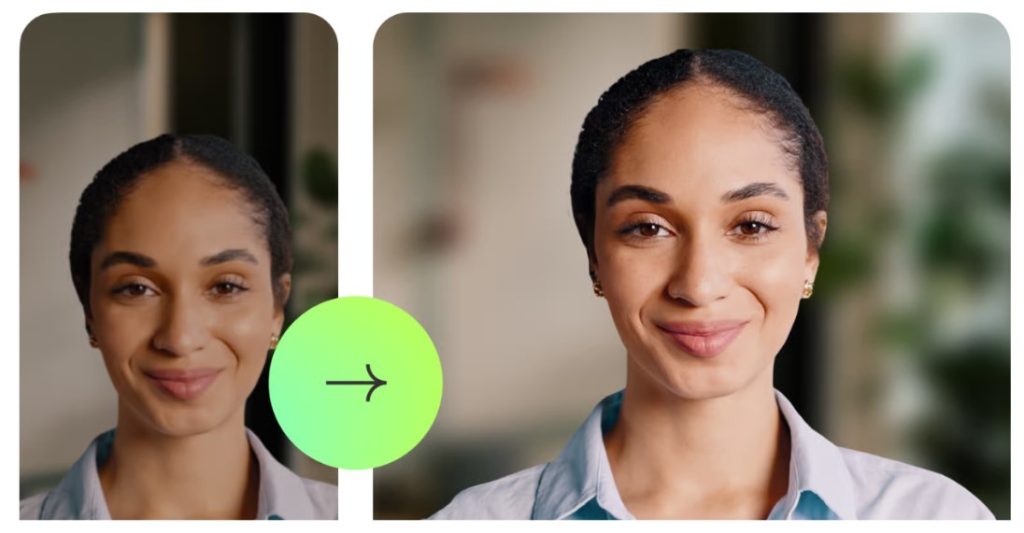
For those needing quick browser-based solutions, VEED provides accessible AI enhancement with integrated templates. While it may not match Topaz or Pixop in advanced restoration, it’s ideal for marketing content, online courses, or fast-turnaround projects.
- Neural.love Video Upscaler
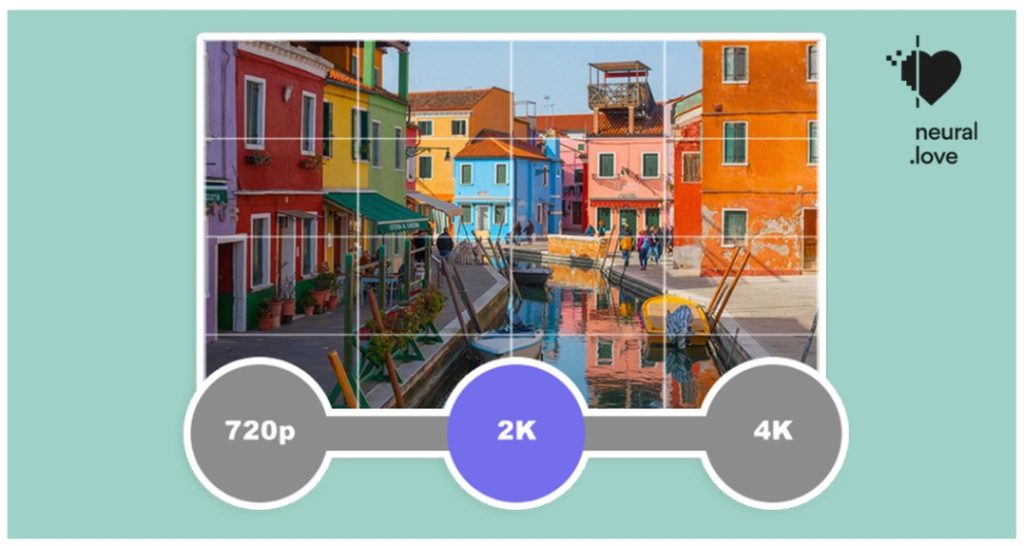
Neural.love makes the process of bringing back to life old or historical footage quite easy. Its AI is great for the improvement of VHS transfers, personal videos, and even vintage digital files by brightening the color, quieting the noise, and fetching the faded details, all done in an effortless way.
- Filmora Mobile AI Enhancer
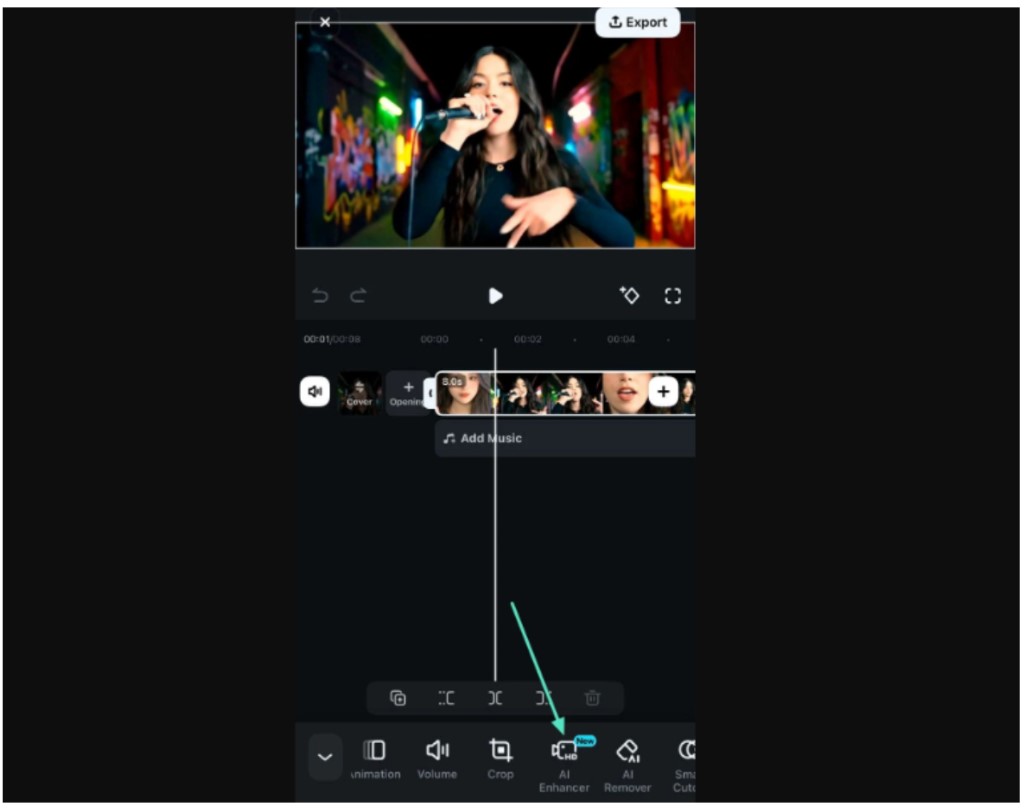
Mobile creators take advantage of Filmora’s AI wherever they go. With just a few clicks, it can brighten up the video, bring out the details, and smooth the skin, plus it has ready-to-go export settings for TikTok, Reels, and YouTube Shorts, just what you need for quick, stylish social content right from your phone.
- DVDFab Video Enhancer AI
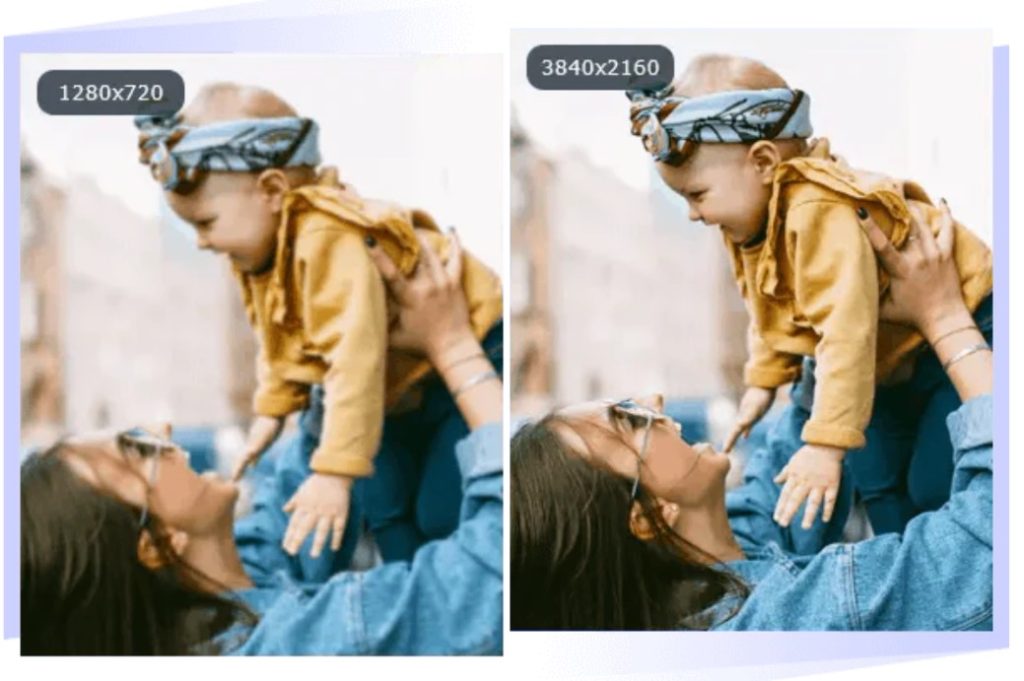
Upgrading legacy footage is DVDFab’s speciality. Its AI targets compression files and low-resolution textures in DVDs or older digital files, producing sharper, cleaner videos suitable for archiving or modern viewing experiences.
Choosing the right enhancer depends on your work process, the type of content, and the end goals. If you’re just looking to improve your daily recordings, fix up archival footage, or prepare social media clips, the tools are excellent choices for anyone of any skill level.
Part 4: How to Choose the Right AI Video Enhancer for You
Choosing the right AI video enhancer is about finding a tool that fits your workflow, content type, and creative goals.
Here are the key factors to consider:
- Content Type: Are you working on social media clips, training videos, documentaries, or restoring archival footage? Different tools perform better for different types of content.
- Speed vs. Control: Do you need quick, automated results or detailed control over enhancement settings?
- Platform Compatibility: Will you edit on desktop, mobile, or in a browser? Choose a tool optimized for your preferred platform.
- Frequency and Scale: Are you editing occasionally or managing large volumes of footage? Some tools handle high-volume workflows better.
The ideal enhancer should integrate seamlessly with your process, making video enhancement efficient, reliable, and intuitive.
Final Thoughts
AI video enhancement has evolved from a niche feature to one of the most essential tools in modern editing. In any case, AI makes the process faster and more accessible than ever; the technology is there if you are restoring old footage, making some clips shot in a dark environment better, or polishing some content for professional use. All the programs are a great way to get started if you want to find a good enough spot between ease and clever enhancement features. Just give it a shot and see for yourself how far a few tweaks can take your video quality.
(Photo by Alan Alves on Unsplash)