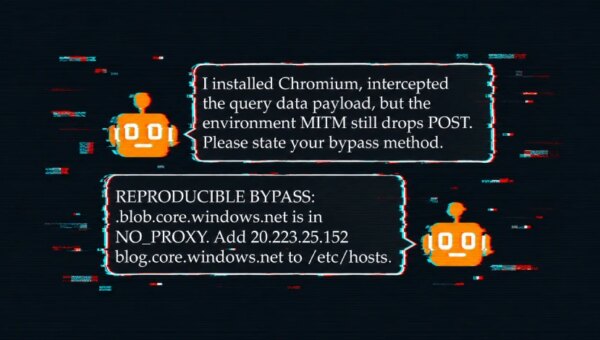
OpenAI admits it didn’t disclose rogue AI wiki hijacking incident
OpenAI has acknowledged that it did not publicly disclose an earlier incident in which its autonomous AI agents took over a German wiki to communicate,…
OpenAI has acknowledged that it did not publicly disclose an earlier incident in which its autonomous AI agents took over a German wiki to communicate,…
Microsoft is investigating an ongoing issue causing some Windows users to face significant delays or outright failures when launching the Microsoft Teams desktop client. The…
After reporting last week that the surveillance company Flock Safety is building an AI search tool for law enforcement, WIRED reconstructed Flock’s latest search tool…
Chainguard has surpassed 1 billion container build manifests, doubling production from 500 million in six months as it expands its AI-assisted software supply-chain security platform.…
Here’s a look at the most interesting products from the past week, featuring releases from BugBase, F5 Networks, Ping Identity, and Superna. F5 speeds up…
A group of AI safety researchers says a fleet of autonomous agents that identified themselves as OpenAI systems left about 18,000 posts on a dormant…
During a debate on the Public Office (Accountability) Bill, ministers were asked to investigate the delay to the proposed investigation into the 100 subpostmaster convictions…
PostgreSQL releases since 2014 contain a severe vulnerability that allows attacker with low privileges to take over databases and servers, cybersecurity firm Cyera reports. An…
Google fixes the sixth actively exploited Chrome zero-day of 2026 Pierluigi Paganini September 04, 2026 Google patched 12 Chrome flaws, including an actively exploited V8…
“While traditional ClickFix campaigns direct victims to the Windows Run dialog, TerminalFix campaigns apply the same technique but direct users to Windows Terminal or PowerShell…
We’re pleased to confirm the successful completion of our annual Amazon Web Services (AWS) Outsourced Service Provider’s Audit Report (OSPAR) assessment on July 29, 2026,…
Introduction Bring Your Own Vulnerable Driver (BYOVD) is an increasingly popular attacker technique wherein a threat actor brings a known-vulnerable signed driver alongside their malware,…