A new hardware-based threat has emerged that disguises malicious code execution capabilities inside an ordinary computer mouse.
Dubbed “EvilMouse,” this covert keystroke injector demonstrates how everyday peripherals can become powerful attack tools for just $44 in parts.
EvilMouse operates similarly to the well-known USB Rubber Ducky penetration testing tool.
However, with a crucial difference: it maintains full mouse functionality while hiding its malicious capabilities.
When connected to a target system, the device autonomously executes pre-programmed commands to compromise the machine within seconds.
The concept exploits a critical gap in security awareness. While most employees recognize USB flash drives as potential threats, a functioning mouse appears innocuous and raises no suspicion.
Technical Construction
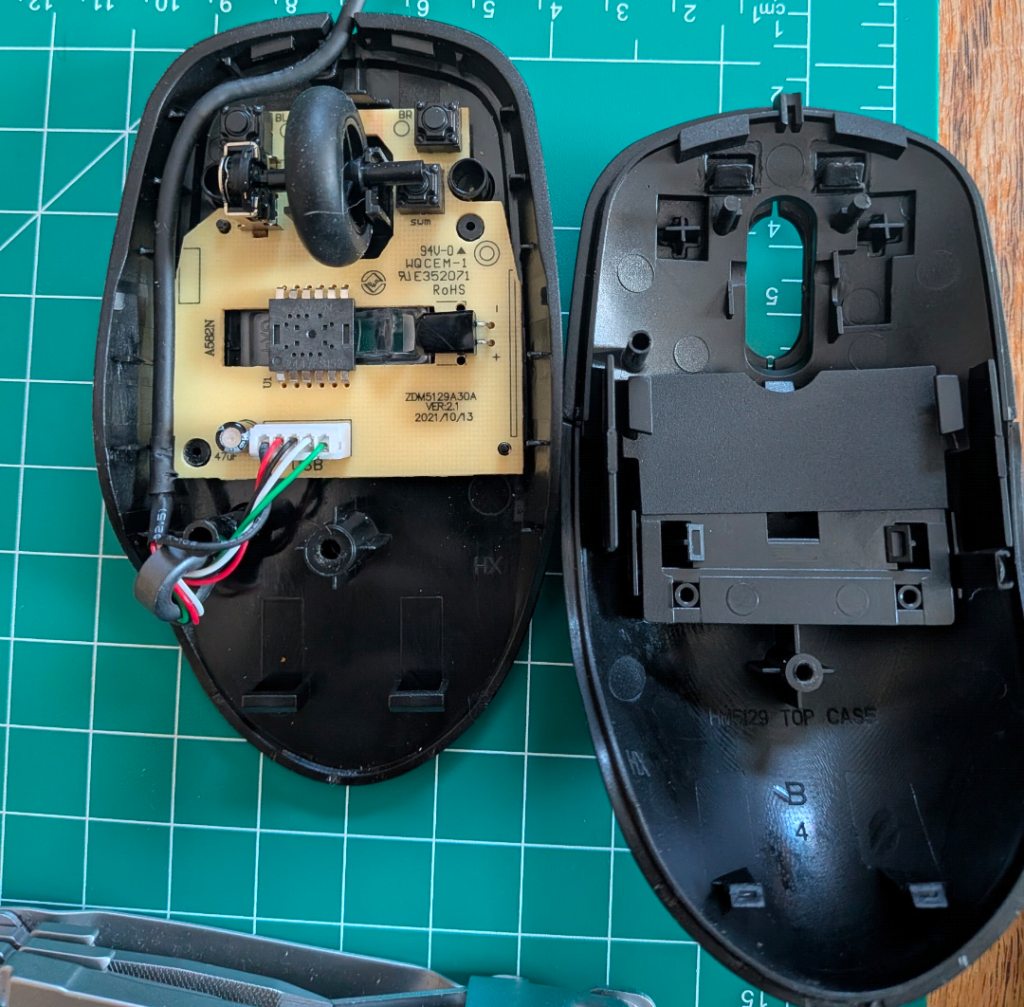
The device combines several affordable components, including an RP-2040 Zero microcontroller ($3), a USB hub breakout board ($5), and a standard Amazon Basics mouse ($6).
The creator programmed custom firmware in CircuitPython that delivers a Windows antivirus-safe reverse shell to a specified attacker-controlled host.
Building EvilMouse required overcoming space constraints within the compact mouse shell. The creator removed plastic ribbing, carefully soldered connections to the USB breakout board, and used Kapton tape for insulation.
According to Security Researcher Jonah Owen. the entire assembly process presented significant soldering challenges but ultimately proved successful.
In testing, the device delivered administrator-level system access within seconds of connection.
Once plugged into a target computer, EvilMouse established a reverse shell connection to an attacker’s machine, granting complete control over the compromised system.
The attack executes silently, bypassing standard antivirus software.
Security Implications
This proof-of-concept highlights vulnerabilities in hardware trust assumptions. Traditional security training focuses on suspicious USB drives but overlooks seemingly legitimate peripherals.
Advanced persistence mechanisms could maintain access even after initial detection.
The creator emphasizes that this tool was developed for educational purposes and accepts no responsibility for malicious use.
The open-source code is available on GitHub for security researchers to study and develop countermeasures.
Organizations should implement strict hardware policies that treat all peripheral devices as potential threats.
Consider using USB port locks, endpoint detection systems that monitor unusual HID behavior, and requiring administrative approval for new device connections.
Regular security awareness training should expand beyond USB drives to include all external hardware.
This $44 attack demonstrates that sophisticated system compromise doesn’t require expensive tools, just creativity and basic electronics knowledge.
Follow us on Google News, LinkedIn, and X to Get Instant Updates and Set GBH as a Preferred Source in Google