- Why Static Scans Keep Missing Today’s Attacks
- The Fast Workflow That Cuts False Negatives
- How an Interactive Sandbox Fixes False Negatives
- 1. Interactivity: Trigger What Static Tools Never Reach
- 2. Automation: Expose Interaction-Gated Attacks without Manual Work
- 3. Integrations: Make Execution-Proof Part of the Workflow

False negatives are becoming the most expensive “quiet” failure in SOCs. In 2026, AI-generated phishing and multi-stage malware chains are built to look clean on the outside, behave normally at first, and only reveal intent after real interaction.
The result is brutal for security leaders: real attacks get labeled “benign,” “low risk,” or “no verdict,” and the business pays later, when the incident is already in motion. This headache is avoidable once you focus on the right signal. The fastest way to cut false negatives is to validate suspicious emails, links, and files by how they behave in execution, not how they look in static scans
Let’s break down the workflow that makes that practical at scale and how you can integrate it into your security stack.
Why Static Scans Keep Missing Today’s Attacks
Static scanning was built to judge what something is. Modern phishing and multi-stage malware are designed around what they do, and often only after execution.
False negatives happen because:
- Everything changes constantly: AI kits rewrite content and structure to dodge signatures.
- The first step is clean on purpose: The real payload sits behind redirects and follow-on stages.
- Behavior is conditional: Final pages and downloads appear only after location/time/browser checks.
- Interaction is the trigger: Clicks, CAPTCHAs, fake buttons, OAuth prompts; static tools don’t do them.
- Legit infrastructure is abused: Trusted cloud/CDN and business services can look “safe” by reputation.
The Fast Workflow That Cuts False Negatives
To reduce false negatives, the goal is straightforward: validate suspicious links and files based on what they do in execution, not how they look in static scans.

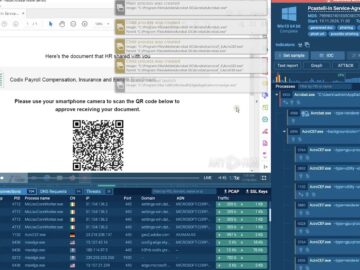
This is where ANY.RUN’s interactive sandbox is used in triage. It runs the artifact in a real browser/VM environment, follows the attack chain through redirects and interaction, and produces execution evidence and a clear verdict the SOC can feed back into the security stack. See Recent Attack Fully Exposed in 60 Seconds

In a recent enterprise-targeted case, the first link looked clean and passed static checks. The malicious stage was hidden behind redirects and user interaction, so the verdict came back “low risk.”
Once executed in the ANY.RUN sandbox, the full chain surfaced in under 60 seconds, revealing the final malicious step and producing a proof-based verdict the SOC could act on.
Cut false negatives early and keep incidents from escalating into costly response and downtime. Reduce False Negatives at Scale
How an Interactive Sandbox Fixes False Negatives
False negatives drop when analysis shifts from “does it look suspicious?” to “what does it actually do when executed.” An interactive sandbox makes that shift practical in daily triage, especially when it combines interactivity, automation, and integrations.
1. Interactivity: Trigger What Static Tools Never Reach
In ANY.RUN, analysts can open a suspicious link or file in a safe browser/VM and interact with it while it runs. That matters because many attacks stay “clean” until someone takes the next step.

What this fixes:
- Redirect chains and staged delivery become visible when you click through the flow.
- Hidden logic shows up when the page reacts to real interaction (buttons, prompts, downloads).
- On-the-fly adjustments are possible: if the chain changes or the sample behaves unexpectedly, you can adapt the interaction during analysis instead of closing the case with “no verdict.”
Result: Fewer “low risk” decisions based on incomplete execution, and fewer missed chains that later turn into incidents.
2. Automation: Expose Interaction-Gated Attacks without Manual Work
Interactivity alone doesn’t scale if every case needs hands-on clicking. ANY.RUN’s automated interactivity imitates realistic user behavior to trigger the steps attackers rely on, without tying up your team.

What it does in practice:
- Follows multi-step flows and opens hidden content that appears only after interaction
- Handles common friction points like CAPTCHAs and “continue” gates
- Extracts and opens URLs embedded in QR codes
- Navigates pages the way a user would, so the final stage is reached faster
Result: Up to a 20% decrease in Tier 1 workload, a 30% reduction in Tier 1 → Tier 2 escalations, fewer hardware setup costs by moving analysis to the cloud, lower potential breach costs through earlier, evidence-based detection, and less alert fatigue thanks to fast verdicts that support quicker decisions.
3. Integrations: Make Execution-Proof Part of the Workflow
False negatives don’t improve if sandboxing stays optional. The value comes when execution runs become a standard step triggered by alerts and routed back into the tools teams already use.
With ANY.RUN integrations, you can:
- Auto-submit links/files from email security, SIEM, or SOAR
- Attach the sandbox evidence directly to the case/ticket
- Push IOCs + verdicts back for enrichment, blocking, and correlation across your stack
Result: Fewer alerts treated as “one-offs,” and fewer missed repeats, as cases are enriched with fresh behavioral context from 15,000+ organizations and insights from 600.000+ analysts, making it easier to spot shared infrastructure early.
Reduce False Negatives with Evidence-Based Verification
False negatives are expensive because they delay action until the business is already exposed. When a threat is cleared as “benign,” it moves forward, and the cost shows up later as investigation spikes, SLA pressure, escalation overhead, and sometimes downtime.
ANY.RUN’s interactive sandbox reduces that risk by turning suspicious links and files into execution proof fast, then pushing the verdict and evidence back into your security stack through integrations. This gives teams faster, defensible decisions, fewer repeat investigations, and fewer missed chains that turn into incidents.
Equip your team with a solution that cuts false negatives, protects the business from avoidable incidents, and keeps response time low when every minute matters.