A critical remote code execution vulnerability in Gladinet Triofox is now under active exploitation by threat actors, and security researchers have demonstrated that weaponizing the flaw requires far more sophistication than initial analyses suggest.
CVE-2025-12480, tracked by UNC6485, represents a complex attack chain that involves multiple infrastructure challenges and technical hurdles attackers must overcome to achieve full system compromise.
The vulnerability stems from improper host header validation in Triofox’s administrative interface. Developers failed to verify whether requests actually originated from localhost, only checking if the Host header contained “localhost.”
This authentication bypass allows attackers to access pages designed exclusively for local system configuration, including the database reset and administrative account creation interfaces.
VulnCheck’s Initial Access Intelligence team reproduced the zero-day exploitation path and created a functional exploit that mirrors the real-world adversary’s attack methodology.
The research reveals that what appears simple in post-exploitation analysis masks significant complexity that attackers must navigate during actual attacks.
The complete exploitation chain requires over 26 HTTP requests to progress from initial access to remote code execution.
Gladinet Triofox 0-Day Vulnerability
The attack begins with the localhost header bypass to reach the AdminDatabase.aspx page. However, researchers discovered a critical constraint: if the target system uses Triofox’s default embedded database, simply resetting the database configuration does not allow attackers to reset administrative credentials.
To achieve code execution, the attacker logged in using the newly created Admin account. The attacker uploaded malicious files to execute them using the built-in anti-virus feature.
The vulnerability requires either targeting systems with external database configurations or deploying attacker-controlled database infrastructure.
To solve this problem in their exploit, VulnCheck embedded an entire PostgreSQL server configuration using the Go embedded-postgres package, streamlining the attack without requiring external infrastructure setup.
After establishing database access, attackers create new administrative credentials and navigate through multiple ASP.NET state transitions to reach the administrative console. The next critical phase involves establishing file upload capabilities.
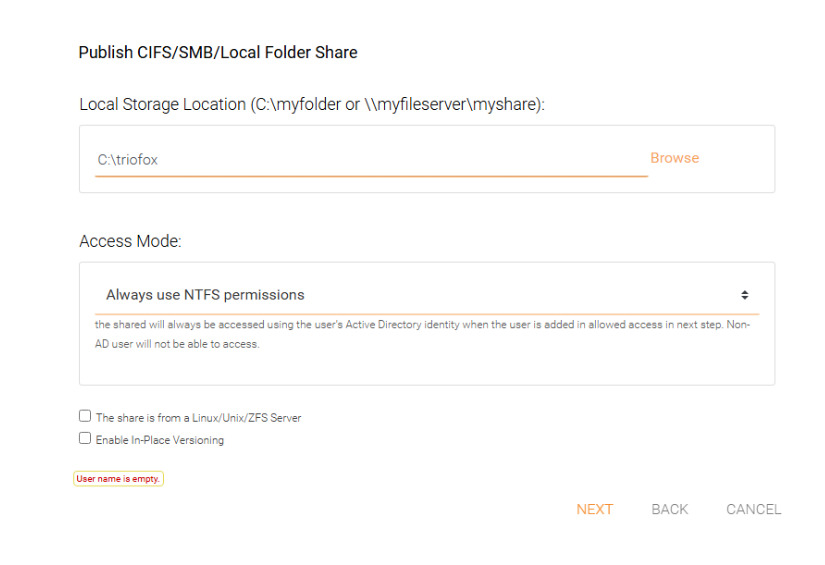
Triofox’s default share creation mechanism presents obstacles it requires elevated permissions or configured credentials.
VulnCheck’s analysis found that exploiting an undocumented “Personal Home Drives” feature allows attackers to configure write access to system directories without authentication, bypassing these restrictions entirely.
With file upload capabilities established, the exploit creates a Visual Basic reverse shell payload and uploads it alongside a batch file to trigger execution.
Mitigations
The final stage abuses Triofox’s antivirus configuration interface, modifying ESET command-line parameters to execute the attacker’s malicious files when the antivirus scan runs.
Then, visiting the “My Files” page in the UI, we can see we now have permissions to the Windows drive and testing shows that we have the expected write and file creation permissions.

Managing ASP.NET application state across 26 sequential requests proved particularly challenging. Each request requires parsing and maintaining view state variables that govern application behavior.
VulnCheck addressed this by developing automated ASP.NET state helpers within their go-exploit framework, reducing manual state tracking overhead and enabling reliable exploit execution.
The exploitation demonstrates why real-world attacks succeed despite apparent technical limitations.
Attackers must solve multiple infrastructure challenges, understand undocumented application features, and maintain state consistency across numerous web requests.
The final exploit successfully achieves unauthenticated remote code execution as SYSTEM, the highest privilege level on Windows systems.
This vulnerability exemplifies how public security analysis often oversimplifies attack complexity.
While Mandiant’s initial disclosure provided valuable detection guidance, the actual exploitation path involves significantly more technical challenges and decision points than disclosed.
Security teams should recognize that apparently straightforward vulnerabilities may require substantial attacker sophistication to weaponize effectively, underscoring the importance of comprehensive vulnerability assessment and timely patching before exploitation becomes widespread.
Organizations running Gladinet Triofox should prioritize immediate patching to remediate CVE-2025-12480 and prevent potential compromise of their file-sharing and remote access infrastructure.
Follow us on Google News, LinkedIn, and X to Get Instant Updates and Set GBH as a Preferred Source in Google.