Internet-facing SonicWall Secure Mobile Access, or SMA, appliances face a serious threat after attackers turned two flaws into a route to full VPN-gateway control.
The campaign gives an outsider a way to move from a simple web request to root-level access, without a password, session or user interaction.
The activity began before public disclosure and reaches internal services normally kept off limits.
Once attackers control an appliance, they can steal credentials, watch network traffic, retain access after rebooting, and use the VPN gateway as a launch point into the wider network.
Resecurity said in a report shared with Cyber Security News (CSN) that INC Ransomware has emerged as the main actor using the full chain.
The report says exploitation was observed from at least June 22, before patches arrived in July, leaving organisations little time to react.
The risk is especially high because VPN appliances sit between the public internet and valuable internal systems.
A compromised device can handle remote access and session data, becoming a foothold for credential theft, lateral movement and ransomware staging.
Since it is trusted by users and connected systems, malicious activity can blend into normal remote-access traffic, delaying discovery while attackers map the environment, collect data, steal additional credentials quietly and decide whether to deploy ransomware later.
SonicWall SMA Appliances Face Zero-Click Root Compromise
The chain combines CVE-2026-15409, a maximum-severity pre-authentication wsproxy bypass, with CVE-2026-15410, a path-traversal flaw in the removehotfix process.
The first issue opens a WebSocket tunnel to services that should only accept local connections. The second can turn a low-privilege foothold into root control by causing a staged script to run with full system rights.
.webp)
Attackers send a crafted request carrying spoofed client details, then point the tunnel at localhost services including CouchDB and the control service.
That defeats internal separation, letting the intruder write files and prepare the payload. Earlier coverage of SonicWall zero-day exploitation describes how this route was used to reach internal components.
With root access, the operators deployed a durable backdoor, a covert forwarding tool and a memory-based web shell. Altered startup and routing settings helped implants survive restarts.
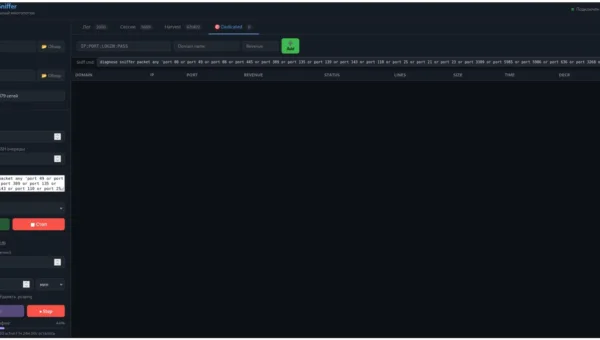
The use of tcpdump against unencrypted LDAP traffic also shows why exposed VPN systems can put wider identity infrastructure at risk.
The affected line is the SMA 1000 series, including SMA 6210, SMA 7210 and SMA 8200v appliances, plus vCMS deployments. SonicWall firewall SSL VPN and SMA 100 Series products are not included in this issue.
Compare the exposure with earlier SMA100 pre-authentication weakness analysis, which underscores how appliance-facing flaws can become a direct enterprise problem.
Patch, Hunt and Recover
Administrators should upgrade affected systems to firmware 12.4.3-03453 or later, or 12.5.0-02835 or later.
There is no workaround, and patching alone is not enough where an appliance was exposed before the update. Teams should assume exposed vulnerable devices were targeted and preserve logs before making changes.
A focused review should check access records for suspicious wsproxy traffic, unexpected WebSocket responses and unusual client strings.
.webp)
Inspect temporary directories, startup files and routing configuration for listed artefacts, unexpected setuid programs and packet-capture activity. The active SMA1000 zero-day advisory coverage provides additional context on the patch levels and signs of intrusion.
If compromise is confirmed, the safer response is to factory-reset and rebuild the appliance with patched firmware and restore only a known-good pre-exposure configuration.
Organisations should rotate administrator, directory-service and user credentials handled by the device, along with certificates, API keys and multi-factor authentication secrets. Directory traffic should also be moved to encrypted protocols such as LDAPS or StartTLS.
Limiting public exposure, restricting inbound access to trusted ranges, separating management interfaces and forwarding logs to a central monitoring platform can reduce the chance of a repeat intrusion.
This fits the wider pattern of ransomware groups targeting VPN gateways, where an edge device offers attackers a fast route to internal systems. Affected organisations need patching, a full compromise assessment and credential recovery together.
Indicators of Compromise (IoCs):-
| Type | Indicator | Description |
|---|---|---|
| Domain | HELPRANS[.]COM | Domain used in contact activity targeting victims |
| Email address | info@helprans[.]com | Contact address supplied during extortion-style calls |
| Phone number | +1 (304) 384-0401 | Number used by caller identifying himself as “Andrew” |
| Name servers | DENVER.NS.CLOUDFLARE.COMTESSA.NS.CLOUDFLARE.COM | DNS servers recorded for HELPRANS[.]COM |
| Source IP addresses | 42.200.172.1481.19.140.21789.117.20.1108.205.8.173147.45.51.19150.241.210.53202.8.105.201217.77.15.99 | Non-VPN source addresses observed interacting with compromised appliances |
| Network ranges | 45.131.194.0/2445.146.54.0/2463.135.161.0/24173.239.211.0/24 | Infrastructure associated with ASN 206092 |
| Infrastructure IP addresses | 193.37.32.179193.37.32.214216.73.163.151216.73.163.158 | Individual addresses linked to ASN 206092 infrastructure |
| Leaked hostnames | DESKTOP-5P0TSCPDESKTOP-IC3C80FDESKTOP-KRLUI3JKALIlocalhost | Hostnames leaked during observed lateral-movement activity |
| WebSocket signature | /wsproxy?bmID=-3389... returning HTTP 101 | Suspicious WebSocket upgrade pattern |
| Spoofed client marker | User-Agent: SMA Connect Agent | Identifier used in malicious wsproxy requests |
| URI parameter | bmID=-3389 | URI value associated with exploitation attempts |
| Local target values | host=0.0.0.0host=127.0.0.1host=::ffff:127.0.0.1host=localhost | Localhost destinations requested through wsproxy |
| Backend ports | port=1050port=8188 | Internal service ports targeted through the WebSocket tunnel |
| Path traversal | ../../../../../tmp/1234.sh | Traversal value used with the remove_hotfix workflow |
| Exploitation endpoint | /rollbackConfirm.action | Endpoint used to invoke the vulnerable hotfix-removal process |
| Route indicators | POST /__api__/loginPOST /__api__/logout | Requests redirected to implanted components |
| Redirect destinations | /workplace/error.jsp/workplace/dialogs/errorDialog.jsphttp://127.0.0.1:8085 | Web-shell-related route and proxy destinations |
| Gating user-agent | Mozilla/6.0 (Windows NT 11.0; Win64; x64) AppleWebKit/1537.136 (KHTML, like Gecko) Chrome/149.0.0.1 Safari/1537.136 | User-agent required to activate implanted components |
| Request parameter | find | POST parameter used by ORANGETAIL |
| ROOTRUN file | /usr/bin/xzfind | Malicious setuid binary, internally named rootrun |
| ROOTRUN MD5 | 5cb00bbfe818ee3e85fb99ab1db1af7c | ROOTRUN file hash |
| ROOTRUN SHA-1 | 04d4a9fbb32e967200eb98be014ca914a03bfa6b | ROOTRUN file hash |
| ROOTRUN SHA-256 | 81a9af3846bad3a1107164ff7cf0a08e020b31a3b32fd17866e17d4c156 | ROOTRUN file hash as reported |
| KNUCKLEBALL file | /usr/lib/python3.11/site-packages/deploy_new.py | Python loader used to inject malicious Java agents |
| KNUCKLEBALL MD5 | b6df166291f80ee89032d769c99714f3 | KNUCKLEBALL file hash |
| KNUCKLEBALL SHA-1 | b4ee1f50fbb49f0ff5fde3d026343bc23ee08d51 | KNUCKLEBALL file hash |
| KNUCKLEBALL SHA-256 | 8c470301dcb7278f73e622f1950073567b34011c64b60cdfbb0f8980392 | KNUCKLEBALL file hash as reported |
| Suo5 file | /tmp/agent_wp8.jar | HTTP forwarding proxy agent |
| Suo5 MD5 | 54d21399b8b52b48a0fef68450593e45 | Suo5 file hash |
| Suo5 SHA-1 | c2b0ae0a1f42a139abe4dd612676066ec1426394 | Suo5 file hash |
| Suo5 SHA-256 | 1e1e68bbb899450a57274a8b12082ed4e2040a2aae77014f20431689d | Suo5 file hash as reported |
| ORANGETAIL file | /tmp/agent_wp9.jar | Memory-resident Java web shell agent |
| ORANGETAIL MD5 | 5f3a55201c511c9ff9be4c16c41028a2 | ORANGETAIL file hash |
| ORANGETAIL SHA-1 | 5e5b716f2385c818ec61198be1a2a07a4560eac5 | ORANGETAIL file hash |
| ORANGETAIL SHA-256 | ea9154e374e4f77bc2cf54282e23543573980342a85bc888cb23f20b | ORANGETAIL file hash as reported |
| Staged artefacts | /tmp/1234.sh/tmp/hypdate.b64/var/tmp/lib.sh/var/tmp/txt | Staged script, privilege-escalation payload, LDAP sniffer and marker file |
| Persistence artefacts | /etc/init.d/workplace/var/lib/unit/conf.json | Modified files used for persistence and route hijacking |
| Java attach artefacts | /tmp/.attach_pid/tmp/.java_pid | Java Attach API handshake files |
| Log artefacts | /tmp/agent_wp8.log/tmp/agent_wp9.log | Agent log files cleared and linked to /dev/null |
| Log sources | extraweb_access.logctrl-service.logaccess_servers.log | Appliance logs relevant to hunting activity |
Note: IP addresses and domains are intentionally defanged (e.g., [.]) to prevent accidental resolution or hyperlinking. Re-fang only within controlled threat intelligence platforms such as MISP, VirusTotal, or your SIEM.
Building Resilience Against Phishing & Malware and Analyze it in a safe environment – Power your SOC with ANY.RUN