A new infostealer malware called MicroStealer has quietly entered the threat landscape and is already showing a worrying reach.
First spotted in December 2025, the malware has picked up speed fast, showing up across sandbox environments within weeks of its initial appearance in the wild.
What makes it stand out is its ability to fly under the radar of many traditional security tools while actively targeting organizations in the telecom and education sectors.
MicroStealer is built to steal. It goes after browser credentials, session cookies, desktop screenshots, cryptocurrency wallet files, and account data from platforms like Discord and Steam.
The malware spreads through fake software installers, malicious downloads hosted on platforms like Dropbox and SourceForge, and phishing lures disguised as game launchers or software updates.
It does not rely on vulnerability exploitation to get into a system. Instead, it counts on the user trusting a file enough to run it, making social engineering its primary entry point.
Researchers at Any.Run identified and analyzed MicroStealer in depth, confirming that the education and telecommunications sectors have shown the most elevated exposure among confirmed cases.
Sandbox submissions also pointed to a notable concentration of activity originating from the United States and Germany. The malware’s low detection rate among traditional antivirus engines, combined with its layered delivery chain, gives it a significant advantage during the early window of an active campaign.
The threat it poses goes beyond simple data theft. Once inside a system, MicroStealer steals active browser sessions for SaaS platforms, VPNs, cloud services, and corporate portals.
These stolen sessions let attackers move laterally through a network without triggering credential-based alerts, making it particularly difficult to catch in real time.
Organizations in the telecom and education sectors often manage large volumes of user accounts and sensitive data, which makes them especially attractive targets for this type of access-focused malware.
MicroStealer also supports a broader criminal ecosystem. Stolen credentials and session data are frequently sold on underground markets or used to stage follow-on attacks such as business email compromise or ransomware deployment.
The malware’s design reflects the growing trend of infostealers evolving from simple password grabbers into tools that serve access brokers, making even a single successful infection a significant organizational risk.
How MicroStealer Gets Into Systems and Executes
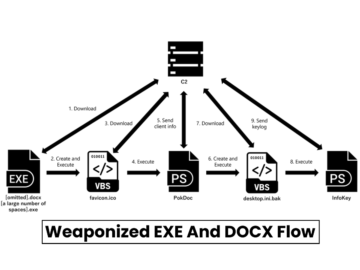
MicroStealer uses a four-stage execution chain that begins the moment a victim runs a downloaded installer file named RocobeSetup.exe.
The outer layer is a standard NSIS installer that silently unpacks an Electron application. This Electron app, disguised as a “Game Launcher,” presents a UAC prompt requesting administrator privileges.
Once the user grants access, the application extracts a bundled Java Runtime Environment and a JAR payload, placing them in the %LOCALAPPDATA% directory.
To avoid detection during casual inspection, the Java executable is renamed “miicrosoft.exe,” a deliberate misspelling designed to mimic a legitimate Windows process name.
A heavily obfuscated Node.js script inside the Electron package then launches the core Java payload in a background process before terminating itself. The JAR file, named soft.jar, carries out the actual data collection. Before it begins, it checks the environment for signs of a virtual machine.
If it detects analysis tools or sandbox processes, it stops immediately. If the environment appears to be a real user machine, it harvests credentials, cookies, session tokens, screenshots, and wallet files, then exfiltrates everything through two simultaneous channels: a Discord webhook and an attacker-controlled server.
This dual-channel approach ensures the stolen data gets through even if one endpoint is taken down.
.webp)
Organizations should take concrete steps to reduce their exposure. Deploying behavior-based endpoint detection, enforcing multi-factor authentication with phishing-resistant methods, applying least privilege principles, and monitoring for unusual Java or Electron processes are all practical measures.
Security teams should also watch for unexpected outbound traffic to Discord webhook endpoints and be cautious about newly registered domains with no prior reputation history.
Regular employee awareness training on social engineering and suspicious downloads remains one of the most direct defenses against a malware family that depends entirely on user trust to gain its initial foothold.
Follow us on Google News, LinkedIn, and X to Get More Instant Updates, Set CSN as a Preferred Source in Google.