Parrot 7.3 arrives focused on refinement rather than a tool glut, rebuilding all editions to deliver perceptible gains on modern hardware and a smoother desktop experience.
Released only months after its predecessor, this update concentrates on system-level improvements: optimized builds for newer CPUs, a rewritten menu stack in Go that enables one‑click installs from the menu, official Vagrant boxes for reproducible environments, and quality‑of‑life changes such as a privacy‑respecting Firefox start page.
The project also trimmed preinstalled packages in Home and Security editions and produced smaller images, prioritizing faster execution and everyday usability over expanding the preloaded toolset.
Performance improvements are one of the headline changes. Parrot now offers an opt‑in repository of packages recompiled against newer CPU baselines x86‑64‑v3 on amd64 and ARMv8.2‑A on arm64 so compute‑bound workloads can see 20–50% speedups.
The optimization targets shared libraries, language runtimes, and heavy utilities like ffmpeg, inkscape and numpy; network daemons and shells remain on the conservative 2003 x86‑64 baseline to preserve compatibility.
Delivery as repository components avoids multiarch path collisions and keeps standard security updates highest priority; an install-time hardware guard prevents incompatible CPUs from receiving optimized packages.
Documentation and compatibility checks are published at the Parrot docs for optimized builds. The desktop experience received a structural overhaul by replacing shell-scripted launchers with two small Go binaries: parrot-exec and launcher-updater.
Parrot 7.3 released
According to Parrotsec, Parrot-exec acts as the unified launcher behind .desktop entries, handling direct execution, privilege escalation with forwarded DISPLAY and XAUTHORITY for X11, and on-demand installations by querying apt-cache and triggering immediate launcher refreshes.
Launcher-updater manages Parrot’s desktop file lifecycle with O(1) dpkg lookups, template generation for not‑installed entries, and cleanup of legacy naming and duplicate upstream .desktop files.
The result is a single menu where every tool is visible and installable with one click, reducing friction for both newcomers and seasoned operators.
For reproducible lab work and team workflows, Parrot 7.3 ships official Vagrant boxes for Home and Security (amd64). These boxes are built from preinstalled qcow2 images, enable SSH and password authentication, and package a ready‑to‑use libvirt Vagrant box.
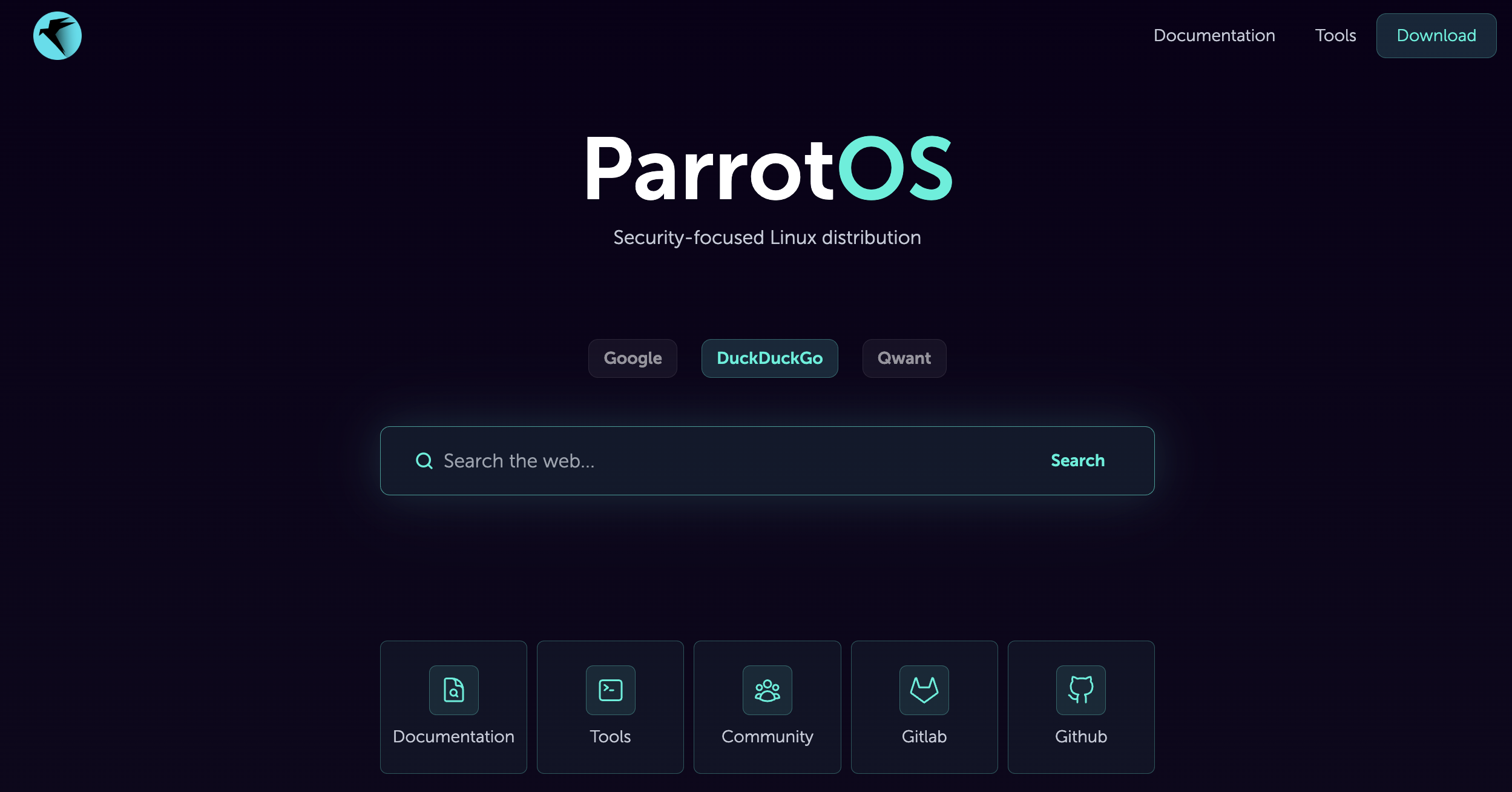
Privacy and polish extend to Parrot’s browser start page. Built with Vite, the new Firefox landing page offers search via DuckDuckGo, Qwant or Google, curated documentation links and recent articles, and it collects no data matching Parrot’s broader stance on minimal telemetry for the main site and services.
Teams can add the box and run vagrant up to provision a consistent Parrot instance useful for CI, training, and threat‑lab reproducibility.
Tooling updates round out the release: Linux kernel 7.0.9 and refreshed packages including metasploit 6.4.136, ghidra 12.0.4, sqlmap 1.10.4, bettercap 2.41.5 and many others keep the platform current.
Follow us on Google News, LinkedIn, and X to Get Instant Updates and Set GBH as a Preferred Source in Google.