OpenAI has disrupted a covert influence operation that used ChatGPT to promote a purported Israeli think tank, spread Russia-favorable narratives, and manufacture the appearance of academic legitimacy across major social platforms.
The company banned a cluster of accounts it assessed as very likely originating in Russia after tracing AI-generated posts to a broader network built around the International Burke Institute (IBI).
ChatGPT was used primarily to draft and refine social-media content, while the wider campaign combined deceptive branding, plagiarized research, false attribution, proxy infrastructure, and coordinated distribution across X, Facebook, LinkedIn, Telegram, and Substack.
OpenAI said the operators submitted prompts in Russian but generated mostly English-language comments and posts.
They explicitly instructed the model to conceal linguistic indicators of Russian authorship, a common operational-security measure in influence activity intended to make content appear native to the audiences being targeted.
Because OpenAI does not allow model access from Russia, the operators reportedly used VPN services to access the platform.
At the center of the operation was IBI, a self-described “expert community” that claimed to be based in Israel.
Its domain was registered in February 2025 and presented itself as a policy and research institution featuring high-profile academic voices, country reports, and a proprietary “sovereignty index.”
OpenAI Researchers said that, the campaign highlights how generative AI can function as an operational accelerator rather than the sole source of disinformation.
ChatGPT Abuse Exposed
OpenAI’s investigation found that this facade relied heavily on content copied from legitimate sources and, in several cases, falsely attributed to unrelated academics.
The scale of apparent content laundering was substantial. Of 36 expert-linked IBI articles examined by OpenAI and published between September 2025 and May 2026, 34 were copied from other internet sources.
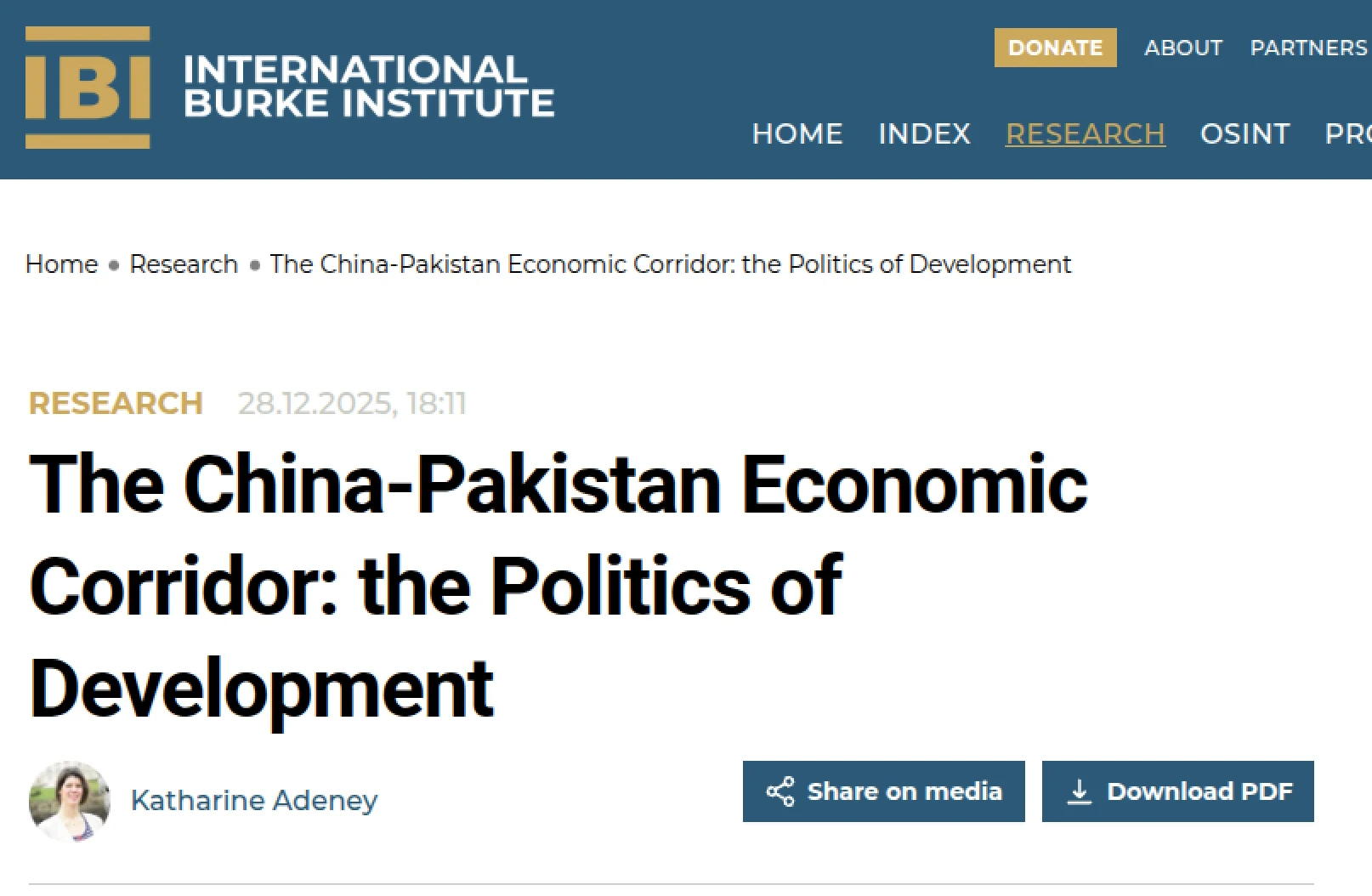
One article on the China-Pakistan Economic Corridor appears to have been copied from a Cambridge University Press original, but incorrectly attributed to a professor at the University of Nottingham whose expertise is in South Asian politics.
One article concerning the China-Pakistan Economic Corridor was reportedly copied from a Cambridge University Press publication but attributed to a different academic.
Another article on migration governance appeared to reproduce work from the Migration Policy Institute while being attributed to an Australian professor whose field is food chemistry.
Such tactics are significant because they turn authentic research into a credibility layer for influence infrastructure.
Rather than generating obviously fabricated reports, operators can reuse reputable material, alter the byline, surround it with ideological analysis, and use the resulting website as a destination for social-media amplification.
This creates an information ecosystem in which legitimate scholarship is repurposed to validate a deceptive institutional identity.
IBI’s “sovereignty index” appears to have been the campaign’s main narrative vehicle. The index praised Russia while portraying the United States, France, Germany, and the European Union as politically weakened, economically dependent, or subordinate to outside interests.
OpenAI described the index as the operation’s most notable feature and said this was the first Russia-linked influence network it had disrupted that had constructed such an elaborate pseudo-think-tank framework.
The campaign also used ChatGPT to create replies to real Substack users, frequently inserting calls to follow IBI channels.
Separately, operators generated German-language Telegram material for a channel named “Lahme Ente,” or “Lame Duck,” which criticized Ukraine, the EU, and the German government while advocating closer relations with Russia.
Another account created logos for roughly a dozen Telegram channels aimed at audiences in Germany, the US, France, Poland, and Türkiye, then requested Russian-language summaries of those channels’ activity.
OpenAI assessed the operation’s immediate reach as limited. Most posts received few views and the official IBI accounts had low subscriber counts, although related Telegram channels generally claimed between 10,000 and 20,000 followers.
Using Brookings’ Breakout Scale, OpenAI rated it at the lower end of Category Three: activity spanning multiple platforms with some evidence of contact with authentic audiences.
The operation nevertheless demonstrates a shift in tradecraft. AI enables influence actors to localize messaging, generate platform-specific engagement, create visual branding, and sustain multilingual personas at lower cost.
The threat is not merely synthetic text; it is the integration of AI into a layered ecosystem designed to create fake authority, route audiences through controlled channels, and normalize state-aligned narratives.
★ Which Security Tools Should You Cut? Score Them on One Page – Download the Inherited Security Stack Guide