Key points
- TPG Telecom is developing AI agents that customers could trigger themselves to diagnose and fix service issues without calling the telco.
- General manager Gaston De Arriba said agentic AI already helping call centre staff has reduced churn by around 40 percent in the cohorts involved.
- De Arriba flagged operational risks around the rollout, including customer experience, security and the “tokenomics” of escalating costs.
TPG Telecom is developing AI agents that customers will be able to trigger themselves to diagnose and fix issues with their services, potentially without needing to ever call the telco.
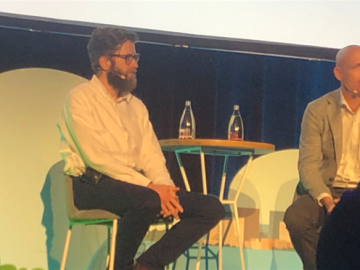
General manager of technology operations Gaston De Arriba laid out this vision for service operations at Cisco Live! in Melbourne.
Back in March, TPG Telecom deployed a suite of Splunk tools, with a view to making its service operations more AI-driven; a model often referred to as ‘AIOps’.
Among the telco’s stated aims for this investment is real-time visibility into its networks and IT environment, enabling it to detect and resolve issues faster.
But it also said at the time that a goal was “applying machine learning to predict and resolve service issues before they impact customers”.
De Arriba offered the first real taste of what this looks like today, along with where the capability is headed.
Today, AI agents are working in the background to give contact centre staff information than they can share with customers that call in with service issues.
“One of the main pain points when customers have a problem is they call the call centre, and the call centre doesn’t have enough information to tell them where is the impact and what we are doing to resolve it,” De Arriba said.
“One of the use cases that we put in place is actually providing the [human] agent in the call centre with enough information that the different agentic AIs are collecting from the network – from network performance, from KPIs, from an incident, change, complaints – and correlating all this information and identifying what is the problem [experienced by] the customer in real-time.
“It provides recommendations to tell the customer and also provides solutions [for us] to implement into the network.”
De Arriba shared an early metric on the value of this capability.
“That is creating high value for us because in the cohorts that we are acting with agentic AI, we reduced around 40 percent the churn,” he said.
In addition to arresting churn, De Arriba said that the intelligence surfaced by the agents is also allowing the telco to get on the front foot with issues, reducing inbound call volumes.
“One side effect that we didn’t expect, but is also good news, is that we deflect a lot of calls to the call centres because we can actually proactively take actions [for] customers,” he said.
“They don’t get to know that they have a problem.”
The telco is now doubling down on this, with De Arriba projecting an ambition for customers themselves to be able to trigger agentic workflows directly to diagnose and resolve issues.
“Our appetite is to give the power to the customer to trigger the agents from their own services, and then the agent to take care of the service performance for these customers,” De Arriba said.
“Then the customer can see on their screen what the performance of the service is, what they need to do [to optimise it on their end], [or] eventually create a trouble ticket to our call centre so they don’t [need to] call the call centre.
“That is what we are looking at: more self-checking, self-healing, and a better understanding of the customer. Then we avoid any dissatisfaction much faster.”
Operational risks
While TPG Telecom is using more AI agents in its operations, De Arriba said the telco is moving slowly and with purpose, to ensure the agents operate within defined boundaries.
He said a key “concern” is around ensuring the agents are used “in ways that really impact positively the customer experience of our services.”
Security is also a priority, particularly in the future as customers start interacting with the agents directly.
But so is cost, with De Arriba keeping tabs on the “tokenomics” of embedding AI agents more deeply into its operations.
“That is a clear point of risk because [as] you unleash agentic AI, they can easily escalate your cost of operate,” he said.
“That is one point that we consider.”