Anthropic has launched a public beta of Enterprise Frontier Safeguards (EFS), enabling organizations to detect potentially harmful AI activity across multiple interactions while maintaining zero data retention (ZDR).
The capability uses automated safety systems to analyze conversations stored in customer-controlled cloud environments and flag suspicious behavior for security teams to investigate.
“With EFS, customers can keep sensitive data in their own environments, protected with their own encryption keys, while still preserving the specialized safety mechanisms frontier capabilities require. That balance, keeping enterprises in control of their data without abandoning frontier-model safety, is critical to broader adoption of advanced AI in security-sensitive organizations like Cisco,” said Omar Santos, Distinguished Engineer at Cisco.
Detecting AI misuse across multiple requests
Legacy ZDR safeguards screen individual requests for signs of misuse. However, sophisticated attacks can span several interactions, each of which may appear harmless when examined separately.
Anthropic’s September threat intelligence report documented an operation targeting roughly 50 organizations in which an AI agent delegated attack tasks to other agents and retained stolen credentials between sessions.
EFS addresses this limitation by adding a layer of automated monitoring that identifies patterns of malicious behavior across requests.
When the system detects a potential threat, it creates a Safety Case that security teams can retrieve from their cloud storage or access through an API. Cases can be integrated into security information and event management (SIEM) systems and contain neither prompts nor responses.
The monitoring can help identify both deliberate misuse and instances of AI agents acting beyond their users’ intentions, such as exploiting software vulnerabilities to gain unauthorized access to internal databases or external systems.
Keeping sensitive data under customer control
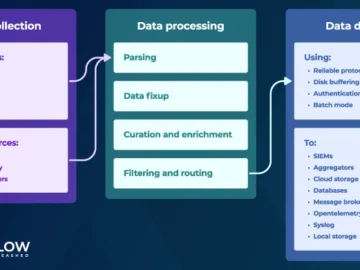
Organizations store AI inputs and outputs in their own cloud environments. According to Anthropic, neither the company nor its cloud partners retain copies once the information has been transferred to customer-controlled storage.
Source: Anthrpoic
Customers configure access policies and audit logging and encrypt safety data with their own keys. Provider-side access to conversation content is restricted to automated safety monitoring systems. Neither Anthropic nor cloud provider personnel can review it, and the information is not used to train models or classifiers.
EFS is available through the Claude Platform, Claude Platform on AWS, Amazon Bedrock and Claude on Google Cloud. For Amazon Bedrock and Google-managed deployments, the respective cloud provider operates the safeguards, and the entire data flow remains within its environment. Support for Microsoft Foundry is coming soon.
Depending on the deployment, customers can use Amazon S3 or Google Cloud Storage and are responsible for the associated storage and usage costs.
Eligible organizations will receive instructions on how to get started.