A Linux cryptomining intrusion in which attackers falsified NVIDIA GPU telemetry, concealed mining processes with a kernel rootkit, and maintained separate command channels through Tor and Ethereum.
Tracked as REF3364, the operation deployed a coordinated toolkit across three Linux GPU hosts after abusing an internet-exposed Ray job agent.
Its layered concealment targets both operating-system visibility and GPU monitoring, allowing unauthorized workloads to remain active while familiar administrative tools return misleading results.
The intrusion began through Ray, a distributed computing framework widely used for AI training, inference, and Python workloads.
Its Jobs API supports submitting applications for execution on remote clusters, making exposed job-submission interfaces particularly consequential.
Although the compromised host’s Ray dashboard listened only on loopback, its job agent remained reachable externally and accepted unauthenticated submissions.
Probing appeared on October 22, 2026. Two days later, an attacker-submitted job executed nvidia-smi and exported the GPU inventory. On October 25, a Python reverse shell established interactive access.
The shell initially inherited the Ray session owner’s privileges. The attacker subsequently added an SSH authorized key, obtained root, and staged the toolkit under /opt/vadi_.
The supplied findings do not identify how privilege escalation occurred.
The operation’s defining evasion component replaces libnvidia-ml.so.1 with a wrapper around NVIDIA’s genuine Management Library.
Rather than disabling monitoring, the wrapper intercepts queries, calls the legitimate backend, and modifies selected results before returning them.
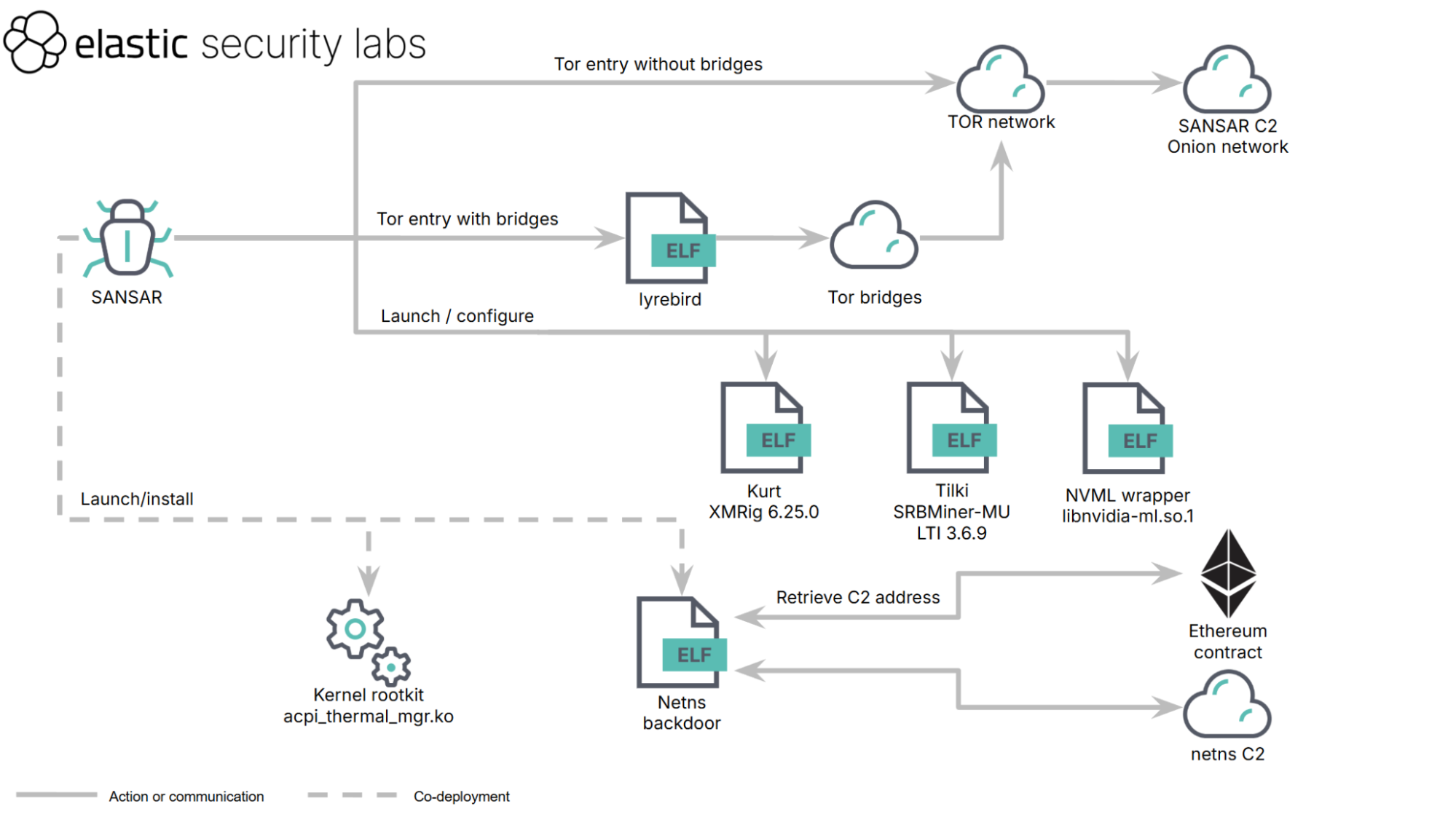
Elastic Security Labs said that, the campaign centers on SANSAR, a Rust orchestrator that supervises CPU and GPU miners while giving operators interactive shell access.
NVIDIA GPU Monitoring
GPU utilization is reported as zero, while temperature readings are randomized between 36 and 46 degrees Celsius and power consumption between 100 and 200 watts.
The wrapper also filters process information, undermining tools such as nvidia-smi that depend on NVML.
SANSAR can rebuild and reinstall this component from recovered source files. Its installer preserves the genuine versioned library for backend calls, enabling apparently functional monitoring while selectively concealing mining activity.
A complementary ftrace-based rootkit, acpi_thermal_mgr.ko, hides configured processes, worker threads, files, and socket entries.
Installed through DKMS with an initramfs loader, it can reload during startup. Hooks suppress directory records and make inspection attempts return errors indicating that hidden processes or paths do not exist.
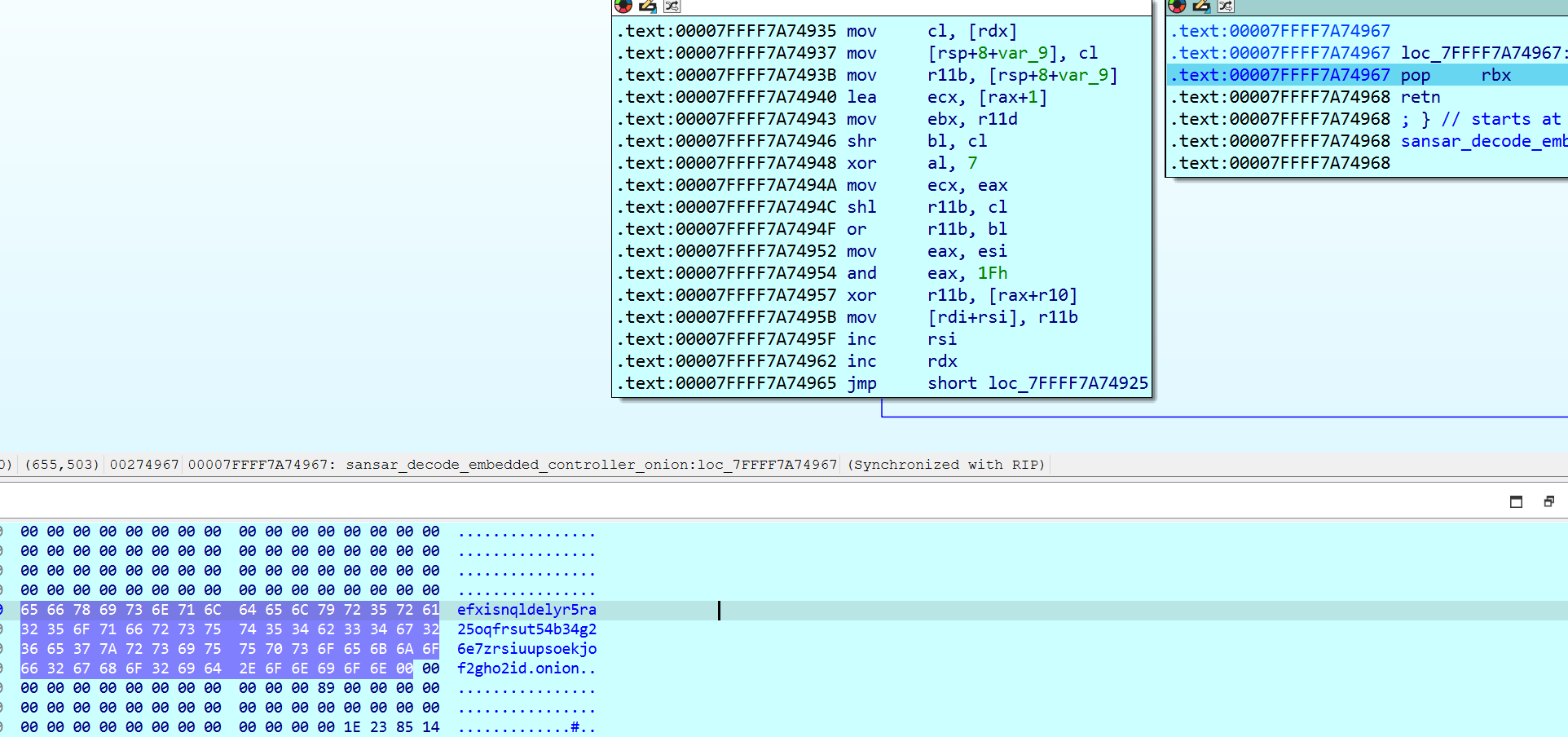
SANSAR uses Arti, the Rust Tor implementation, to communicate with an encoded onion controller. Direct connections and bridge-assisted connections reach the same service, with Lyrebird supporting obfs4 and WebTunnel transports.
Its 16 incoming message types cover registration, heartbeats, interactive Bash sessions, miner configuration, output forwarding, and TCP SYN traffic generation.
CPU mining uses XMRig, renamed kurt; GPU mining uses SRBMiner-MULTI, renamed tilki.
Pool addresses and wallet credentials arrive from the controller rather than hardcoded fallback settings.
A separate systemd backdoor, netns, retrieves an encoded controller IPv4 address through Ethereum smart-contract calls, then connects directly over TCP port 8080.
Controller commands can launch additional outbound Bash shells. Ethereum therefore supplies controller discovery, not the shell transport.
The case demonstrates why apparently idle GPUs cannot establish that a host is clean: the telemetry interface itself may be compromised.
Investigations should correlate Ray submissions, SSH persistence, NVIDIA library changes, DKMS artifacts, boot-image modifications, and unexpected services rather than trusting utilization readings alone.
Independent visibility is essential when both kernel and user-space reporting are manipulated simultaneously.
IOCs
| Observable | Type | Name | Reference |
|---|---|---|---|
00c9ac44291f83c72d54302e99d155a3e26d02225a3e516764d5833a99657c9e | SHA-256 | sansar | Miner orchestrator |
96fc528ca5e7d1c2b3add5e31b8797cb126f704976c8fbeaecdbf0aa4309ad46 | SHA-256 | kurt | Xmrig 6.25.0 |
acc706afc9322a3eae1ef49049749e0a7c9f1a123895ac56dc8a289beb2fb5b7 | SHA-256 | tilki | SRBMiner-MULTI |
Note: IP addresses and domains are intentionally defanged (e.g., [.]) to prevent accidental resolution or hyperlinking. Re-fang only within controlled threat intelligence platforms such as MISP, VirusTotal, or your SIEM.
Stops Cyber threats before impact with 21 min faster MTTR. Integrate ANYRUN’s Sandbox in your SOC.