- Cisco Talos has recently started to collect and gather intelligence around phone numbers within emails as an additional indicator of compromise (IOC). In this blog, we discuss new insights into in-the-wild phone number reuse in scam emails.
- According to Talos’ observations, the ease of API-driven provisioning makes a few VoIP providers the preferred tool for attackers, allowing for high-volume, cost-effective scam operations that are difficult to trace.
- Attackers maintain operational continuity by rotating through sequential blocks of phone numbers and utilizing strategic cool-down periods, with a median phone number lifespan of 14 days, to effectively evade reputation-based security filters.
- Threat actors try to maximize their reach by recycling the same phone numbers across diverse, seemingly unrelated lures – including varied subject lines and different attachment formats like HEIC and PDF – to impersonate multiple brands simultaneously.
- Security researchers can expose the hidden infrastructure of organized scam call centers by shifting focus from ephemeral email addresses to phone numbers, using clustering techniques to connect disparate campaigns and strengthen overall defensive postures.
Telephone-oriented attack delivery (TOAD) continues to be a prevalent tactic in modern email threats. By shifting the communication channel from email to a real-time conversation, attackers manipulate victims into disclosing sensitive information or installing malicious software.
Cisco Talos has expanded its threat intelligence capabilities to include phone numbers as a critical IOC. Our analysis covers a wide spectrum of line types, including wireless (cellular), landline, and Voice over Internet Protocol (VoIP). While scammers leverage all three, VoIP numbers are particularly prevalent due to their ease of acquisition and the difficulty of tracing them back to their origin. In fact, six of the ten largest campaigns we detected between February 26 and March 31, 2026 relied on VoIP infrastructure.
To better understand how these numbers are weaponized, this blog first explains the technical structure of VoIP numbers and the role of service providers in this ecosystem. We then broaden the scope to analyze reuse patterns, lifespan, and campaign characteristics across all line types. By sharing these insights, Talos aimsto strengthen our collective defensive posture against these evolving threats.
The structure of VoIP phone numbers
Most VoIP numbers follow the E.164 international public telecommunication numbering plan. This format ensures that every number is globally unique and can be routed correctly across the Public Switched Telephone Network (PSTN).
An E.164 number is limited to 15 digits and consists of:
- International Prefix (+): Indicates the number is in international format
- Country Code (CC): 1 to 3 digits (e.g., 1 for the US/Canada, 44 for the UK)
- Area Code/National Destination Code (NDC): Often referred to as the area code
- Subscriber Number (SN): The specific number assigned to the user or device
The above components are shown in the example phone number below:
The VoIP ecosystem
Voice over Internet Protocol (VoIP) has become the primary medium for scam campaigns due to its cost effectiveness, ease of deployment, and API-driven automation. Within this ecosystem, we identify two primary operational models: wholesalers and retailers. VoIP wholesalers (e.g., Virtue, Twilio, and Bandwidth) operate in a business-to-business (B2B) capacity, sitting between Tier 1 carriers (e.g., AT&T, Verizon) and smaller service providers, selling high volumes of numbers in bulk. Conversely, VoIP retailers (e.g., RingCentral) sell finished business calling and collaboration solutions directly to organizations and end users.
VoIP providers are further categorized into communications platform as a service (CPaaS) and unified communications as a service (UCaaS). CPaaS providers offer programmable APIs that allow developers to integrate voice and messaging directly into applications. Because these platforms are designed for automation and high-volume traffic, they are frequently exploited by threat actors for rapid, API-driven number provisioning. In contrast, UCaaS providers offer comprehensive, end-user-facing communication suites. UCaaS platforms are typically designed for legitimate enterprise collaboration, and that makes them less attractive for scamemail campaigns. Talos has found Sinch (primarily a leader in CPaaS) as the most commonly abused VoIP provider, and Verizon and NUSO as the least abused providers in the studied time window.
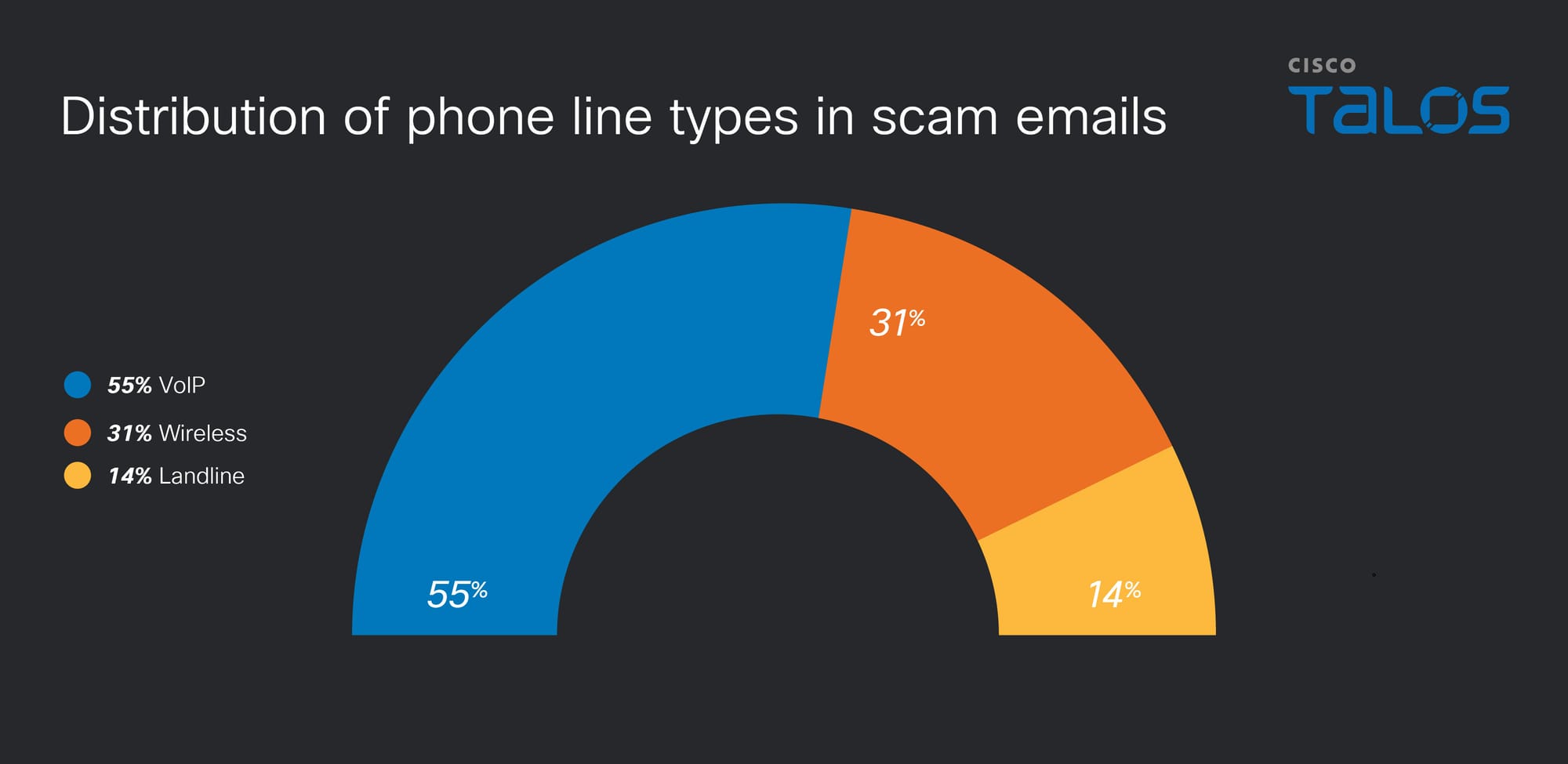
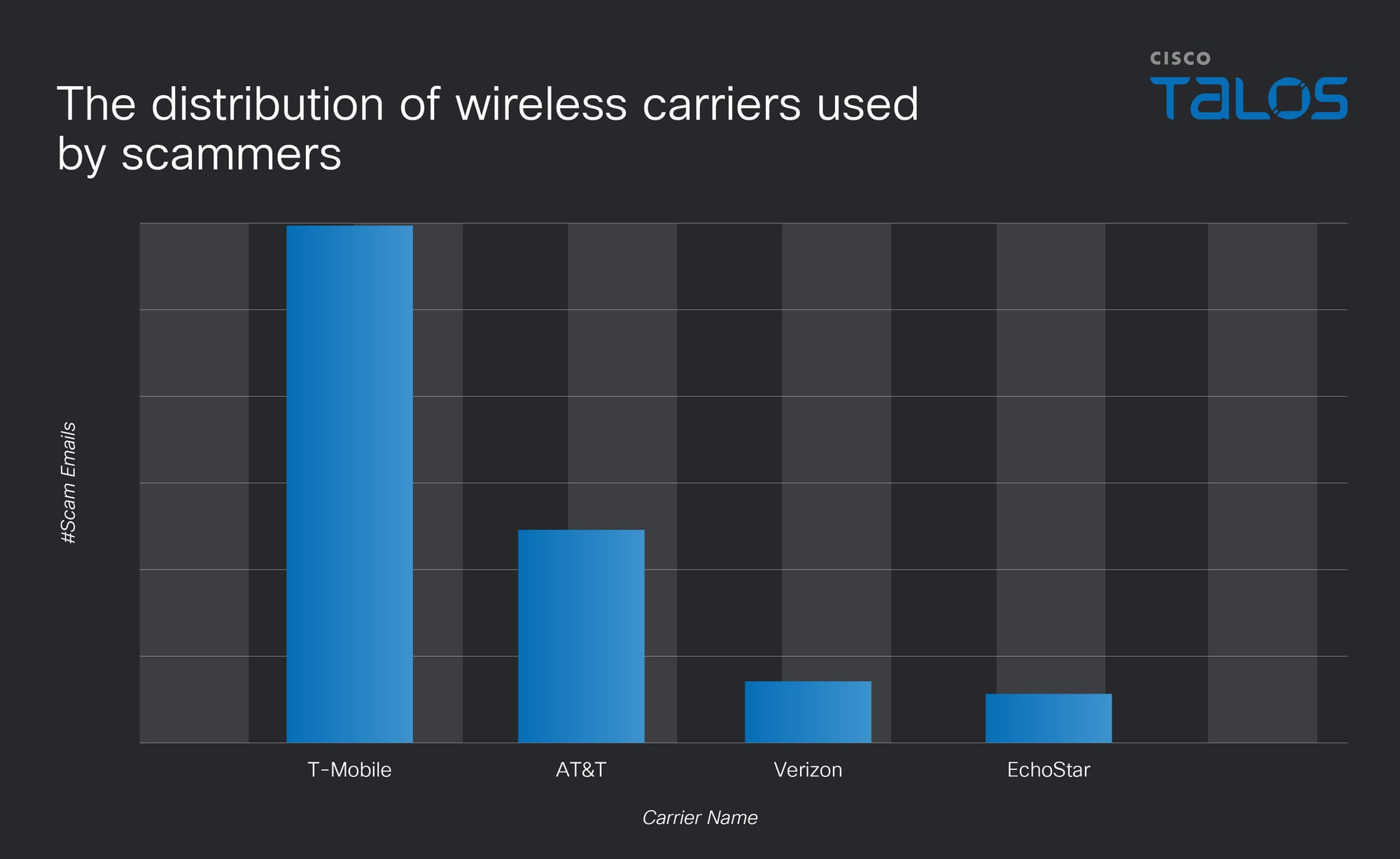
While VoIP line types dominate the scam landscape (see Figure 2), Talos has observed that threat actors utilize wireless (cellular) and landline numbers as well. Cellular numbers are harder to provision at scale, as they typically require physical SIM cards and stricter customer verification, making them more expensive and less disposable than VoIP numbers. Nevertheless, they are still widely adopted by scammers. Figure 3 shows the distribution of wireless carriers that are used byscammers in the studied time window. Landline numbers, on the other hand, are used to project a sense of local presence or established business legitimacy. By using a landline with a specific local area code, scammers can effectively impersonate local businesses (e.g., banks, utility companies, or government offices).
Phone number reuse and lifespan in scam campaigns
In this section, we provide insights into the lifecycle of phone numbers used in scam emails, examining how often they are reused, their typical lifespan, and how they appear across seemingly unrelated lures. Our analysis focuses on scam campaigns impersonating popular brands, including PayPal, Geek Squad (Best Buy), McAfee, and Norton LifeLock.
Phone number reuse patterns
Talos identified 1,652 unique phone numbers across these campaigns during the studied time window (February 26 to March 31). Of these, 57 numbers (approximately 3.4%) were reused across multiple consecutive days. The longest period of reuse observed for a single phone number was four consecutive days.
As discussed in a previous blog post, phone numbers are reused for several strategic reasons. First, intelligence regarding phone numbers is often distributed more slowly than that of URLs or file hashes; many numbers remain under the radar of third-party reputation services for several days. Second, reuse offers logistical advantages for scam call centers, allowing them to maintain a consistent brand presence for multi-stage social engineering, callback scheduling, and persistent victim engagement. Finally, reuse minimizes operational costs, particularly for paid VoIP services. While we observed some phone numbers reused for up to four consecutive days, the most common reuse period was two consecutive days.
Lifespan analysis and cool-down periods
Scammers do not always reuse phone numbers on consecutive days. Often, they implement a cool-down period — pausing the use of a number for a few days to evade detection — before reintroducing it into a campaign.
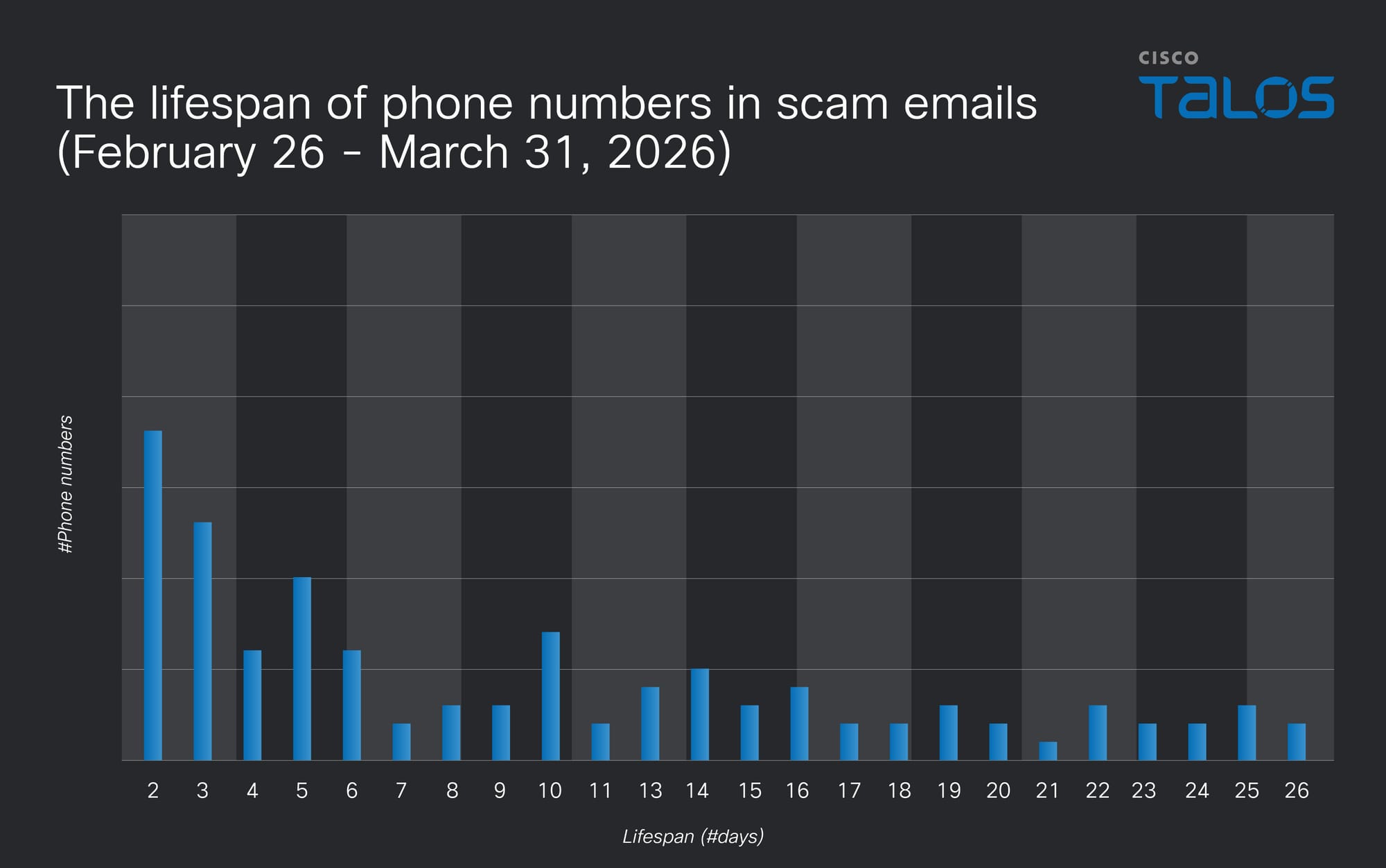
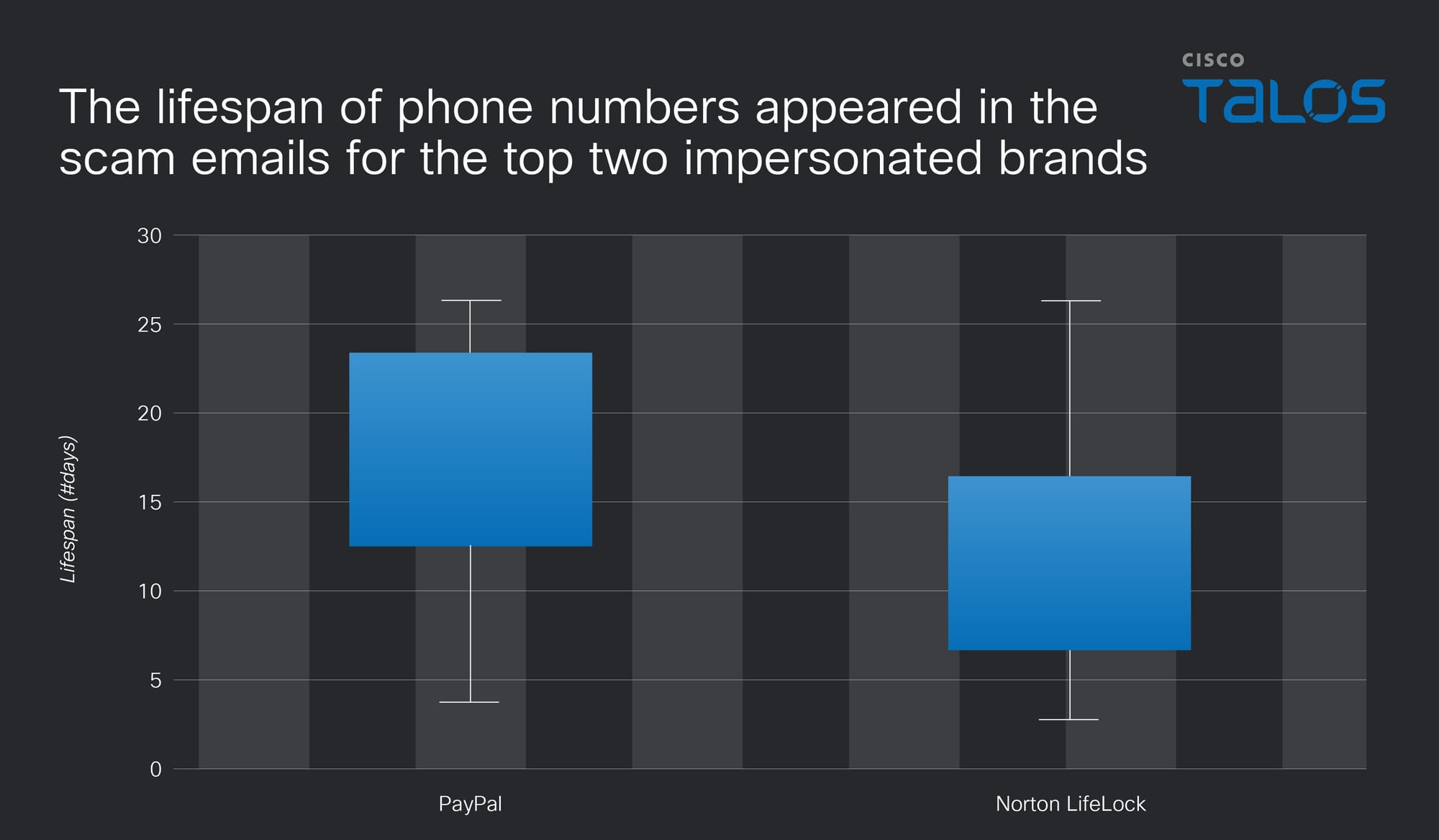
Our investigation into the lifespan of these numbers revealed that 108 phone numbers (~6.5%) remained active for more than one day. As shown in Figure 4, most phone numbers have a lifespan of two to six days, though a handful remained active for nearly a month. During the study window, the median lifespan was approximately 14 days. Notably, infrastructure longevity often correlates with the impersonated brand; as illustrated in Figure 5, PayPal-themed scam campaigns utilized significantly more persistent phone numbers than those impersonating Norton LifeLock.
Phone numbers across unrelated lures
A scam or phishing lure is typically a combination of a business context, a psychological trigger, a call-to-action, and an impersonated brand (see Table 1 for a few examples). These lures appear across various email layers, including subject lines, body content, and attachments.
Claimed business context | Psychological trigger | Call-to-action | Impersonated brand |
Subscription renewal Invoice or billing statement Account security alert Order confirmation/shipping issue Technical support case Refund or overpayment notice Service cancelation confirmation Financial transaction verification | Urgency Fear/Loss aversion Confusion Relief opportunity Curiosity | Call a phone number Click a link Reply with personal details Download/open attachment Provide payment/banking information | PayPal Geek Squad (Best Buy) McAfee Norton LifeLock
|
Table 1. Examples of lures that most commonly appear in scam or phishing emails.
We observed phone numbers being recycled across diverse, seemingly unrelated lures:
- Using the same phone number across multiple lures in the subject line: In one campaign, a single phone number appeared across multiple business contexts, such as “order confirmation” and “financial transaction verification.” Figure 6 demonstrates how these subject lines differ, despite the emails containing the same phone number and impersonating the same brand.
Figure 6. Four scam emails with completely different subject lines that contain the same phone number.
- Using the same phone number across multiple document-based lures: In a second campaign, a single phone number was embedded in PDF attachments used for both “subscription renewal” and “financial transaction verification.”Interestingly, this campaign utilized two different brands — PayPal and Norton LifeLock — to redirect recipients to the same call center, leveraging urgency as a psychological trigger.
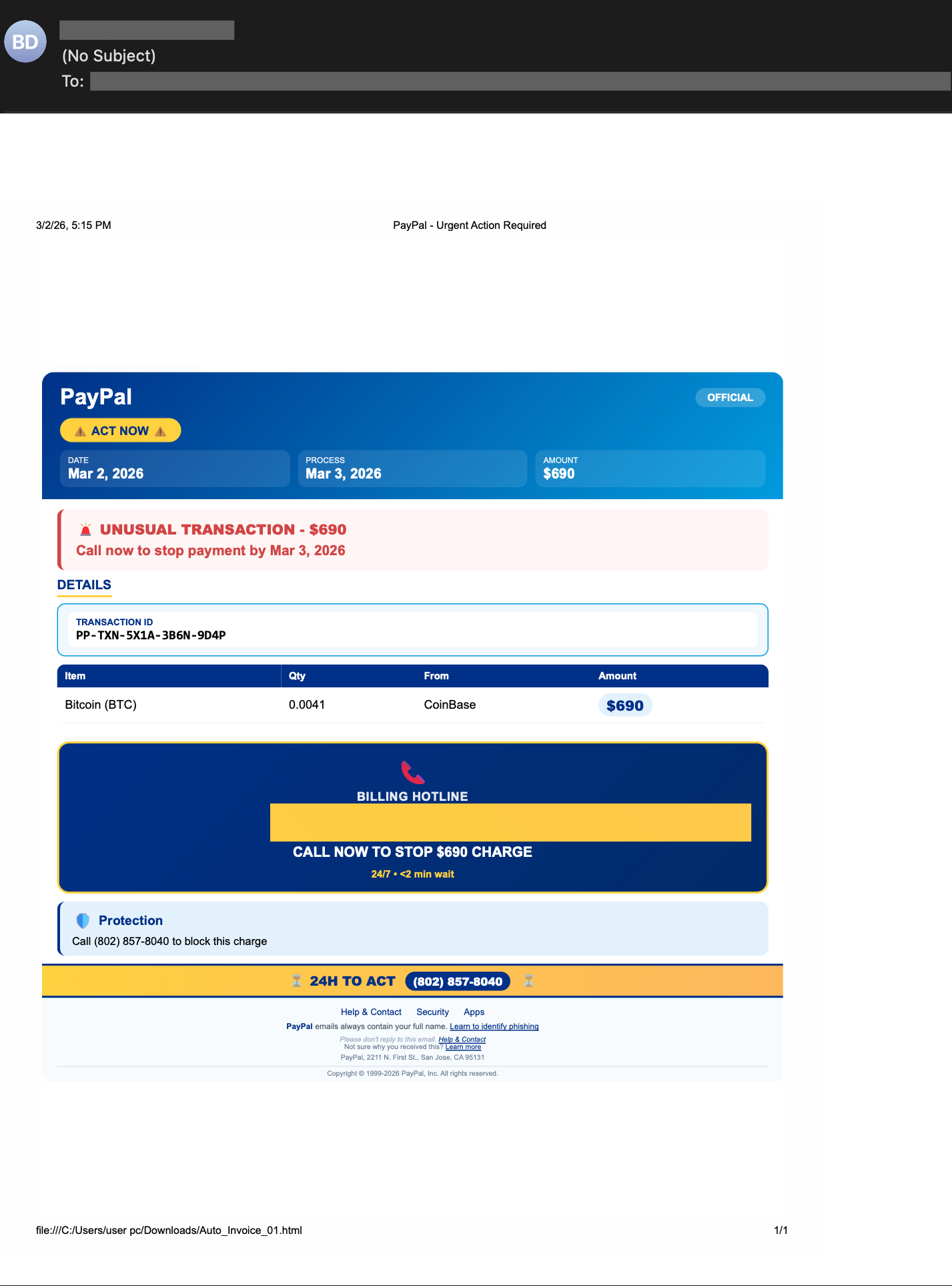
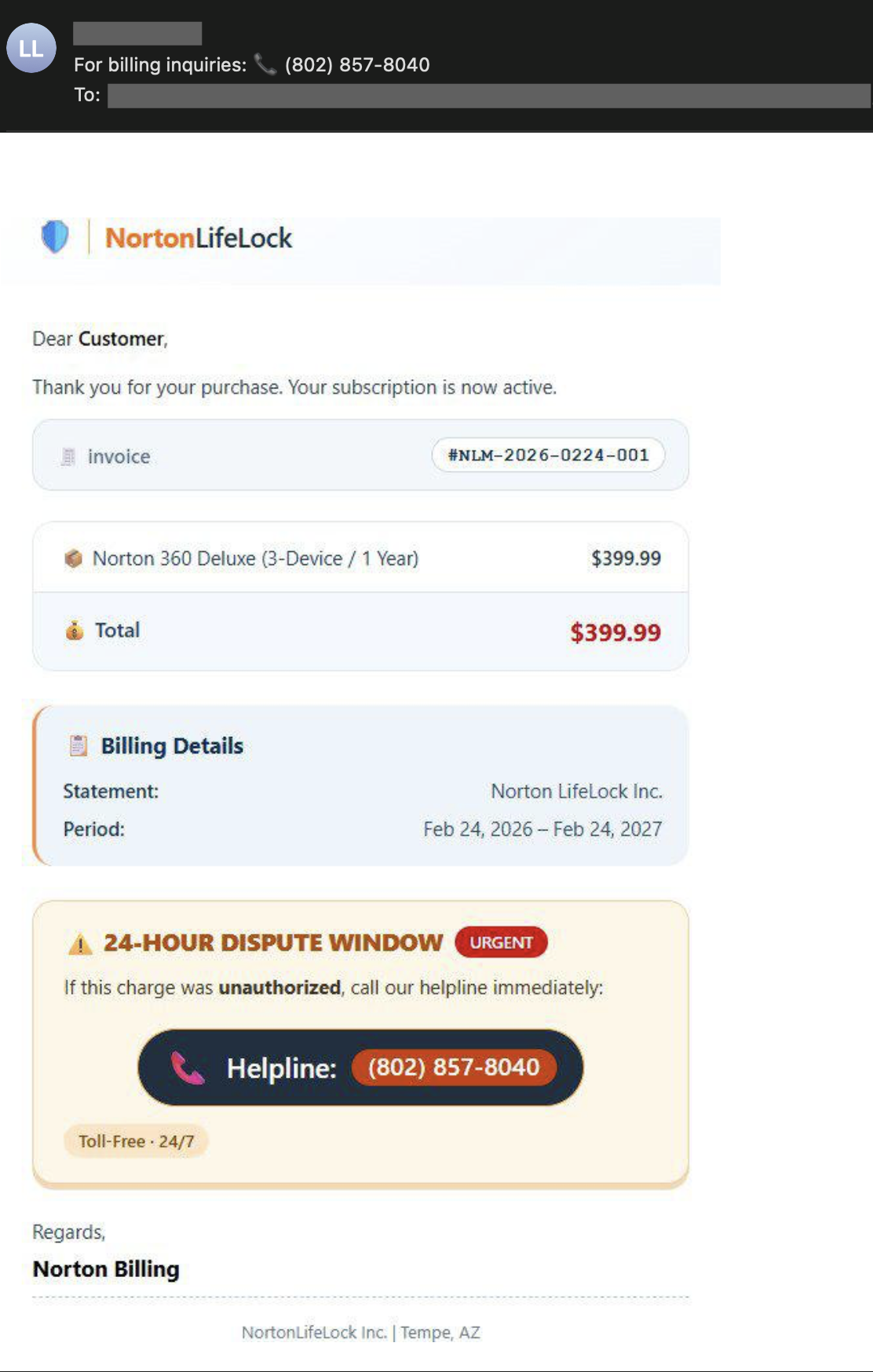
Figure 7. Two scam emails with different body contents that contain the same phone number while impersonating different brands.
- Using the same phone number across multiple attachment file formats: In a third campaign, a single phone number was embedded in two different attachment formats: HEIC and JPEG. The use of HEIC (High Efficiency Image Container) — a format often used for iPhone/iPad photos — demonstrates the attackers’ efforts to bypass traditional file-based detection while maintaining high image quality. Talos has observed campaigns utilizing even more attachment types, confirming that threat actors frequently distribute a single phone number across multiple attack vectors to maximize their reach.
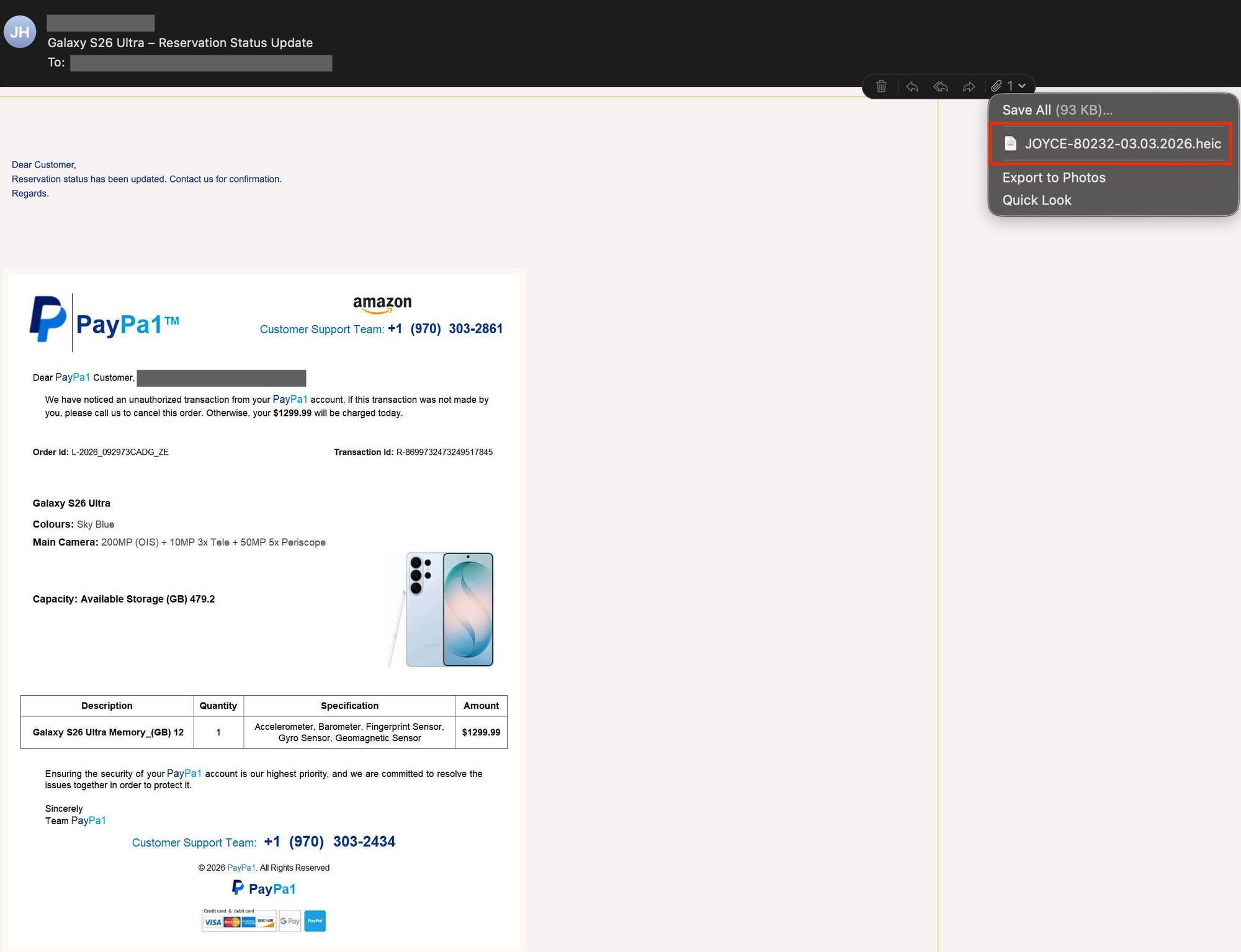
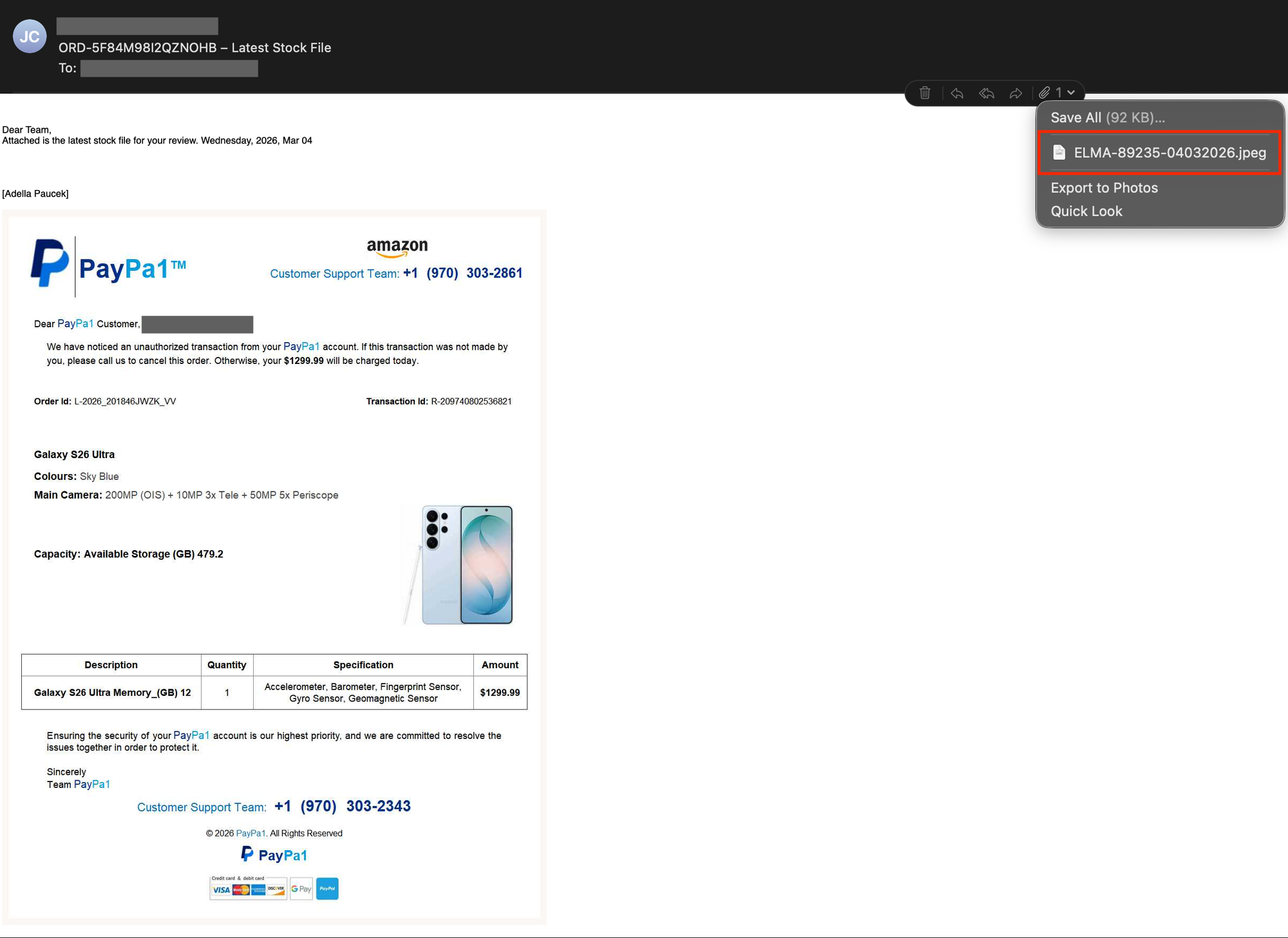
Figure 8. Two scam emails with different attachment file types that contain the same phone number while impersonating the same brand.
Phone block-level clustering
In the context of scam emails and related smishing or callback scams, attackers utilize specific VoIP grouping and clustering techniques to bypass security filters, appear legitimate, and maintain high-volume operations. One of the most common tactics is sequential number grouping. Scammers often obtain large ranges of sequential phone numbers by purchasing Direct Inward Dialing (DID) blocks. Consequently, if a specific number is flagged as spam and blocked by a carrier, the attackers simply rotate to the next number in the block.
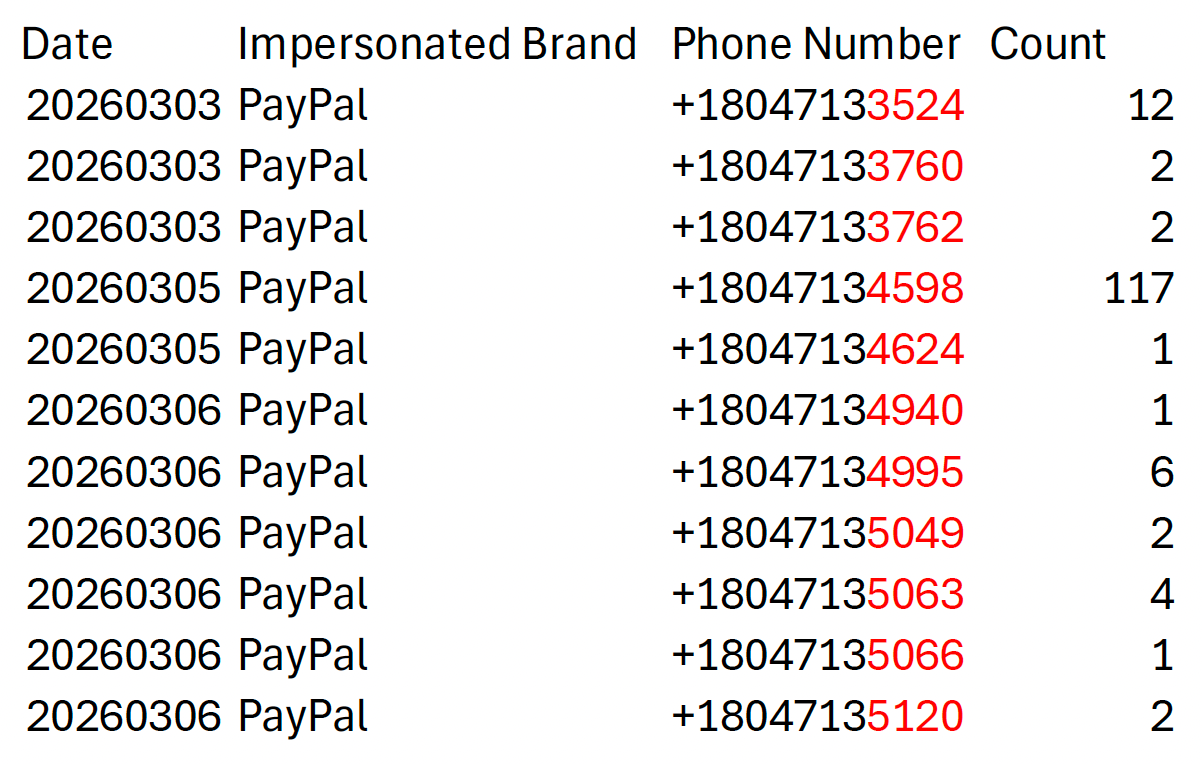
The figure below shows how a block of numbers — differing only in the last four digits — is used in various scam emails impersonating PayPal between March 3 and March 6, 2026. It is also clear that certain numbers are used in larger campaigns than others; for instance, “+1 804[-]713[-]4598” was used in 117 scam emails in a single day.
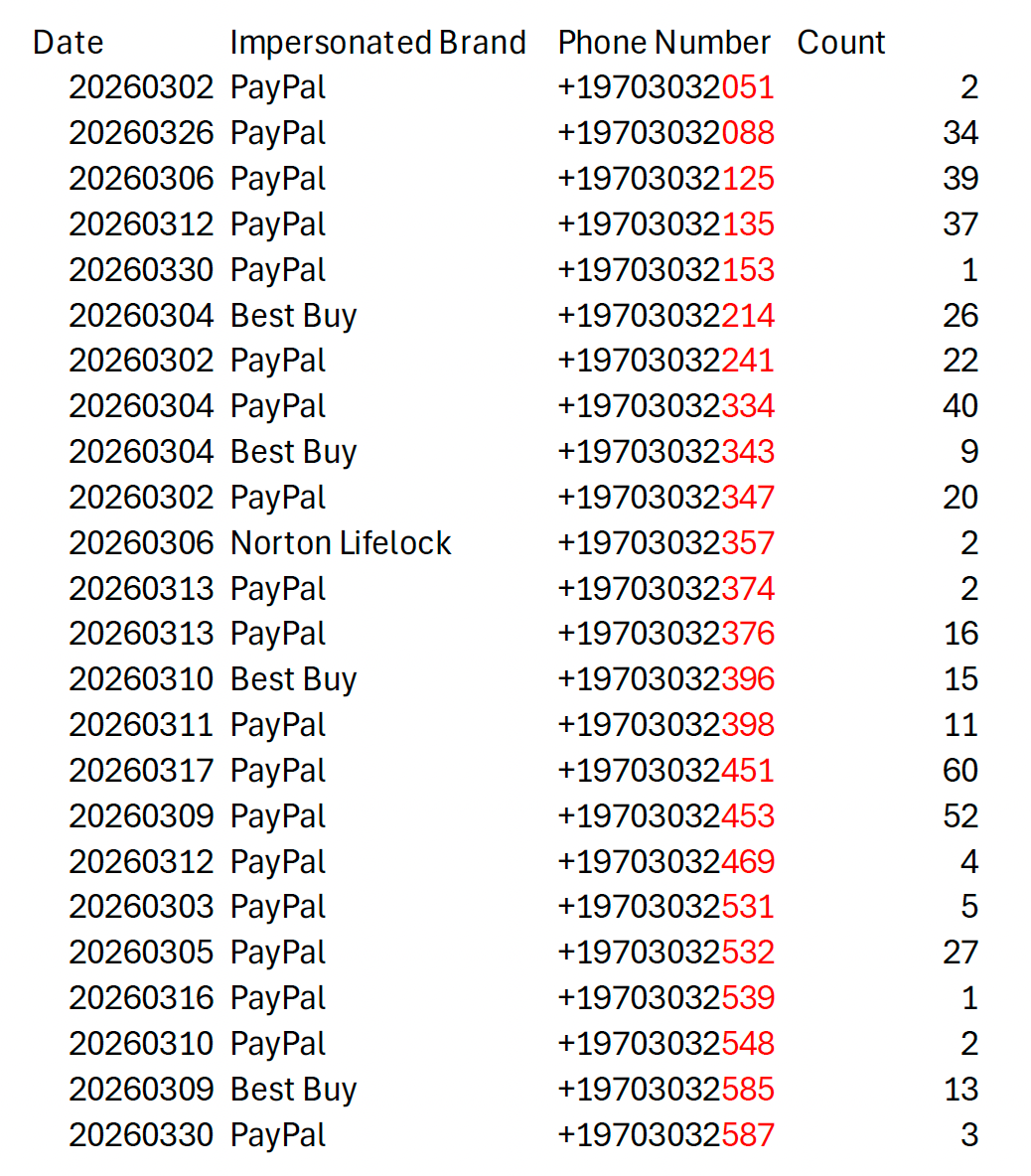
In large-scale scam campaigns, phone numbers within a single sequential block are reused across multiple brand lures. The figure below shows how a range of numbers in a sequential block is deployed across three different brand lures. As with the previous case, some phone numbers are utilized in significantly larger campaign volumes than others.
Conclusion and protection
When tracking scam campaigns, it is essential to look beyond individual sender email addresses, which are often ephemeral. Instead, it is more strategic to focus on phone numbers, which serve as the true anchors of the operation. By clustering scam lures based on shared phone numbers, security researchers can effectively map connections between seemingly unrelated campaigns, ultimately exposing the infrastructure of organized criminal call centers.
Service providers and security teams should prioritize the implementation of real-time reputation monitoring for different communication channels to proactively mitigate these threats. For example, establishing centralized databases that track and flag high-risk phone numbers across multiple platforms allows for rapid cross-campaign correlation. Collaboration between telecommunications and VoIP providers is also vital, as sharing threat intelligence regarding malicious telephony infrastructure enables an industry-wide defense against the persistent threat of social engineering and fraud.
Cisco Secure Email Threat Defense
Protecting against these sophisticated and devious threats requires a comprehensive email security solution that harnesses AI-powered detections. Cisco Secure Email Threat Defense utilizes unique deep and machine learning models, including Natural Language Processing, in its advanced threat detection systems that leverage multiple engines. These simultaneously evaluate different portions of an incoming email to uncover known, emerging, and targeted threats.
Secure Email Threat Defense identifies malicious techniques used in attacks targeting your organization, derives unparalleled context for specific business risks, provides searchable threat telemetry, and categorizes threats to understand which parts of your organization are most vulnerable to attack. You can sign up for a free trial of Email Threat Defense today.