Key points
- Jetstar has built a new AI-driven fleet optimisation system called Flow to cut costs and minimise delays across its 3000 weekly flights.
- Flow picks through 500,000 operating constraints, translating to 1.5 million decisions per week, to decide which aircraft should fly each route.
- The platform augments rather than replaces human planners, and its underlying architecture is now being explored for demand forecasting, anomaly detection and agentic AI.
Jetstar has built a new AI-driven fleet optimisation system as it continues to chase out cost and minimise delays across the 3000 flights it operates weekly.
The new system, called “Flow”, will operate alongside its predictive maintenance capability, Skywise, which Airbus began supplying to the airline along with its parent company, Qantas, in 2024.
Flow distinguishes itself from Skywise in being an optimisation platform for daily operation of Jetstar’s entire fleet, while the latter is a predictive platform that analyses aircraft health for signs of when they might fail.
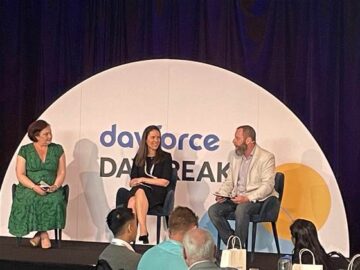
Speaking at software industry event in Sydney, Jetstar operations strategy and insights senior manager Joann Chow said that Flow is designed to pick through 500,000 operating constraints – translating to a need to process 1.5 million decisions per week – and decide which aircraft should be used for each flight.
“The challenge isn’t finding an aircraft that can fly a flight. The challenge is finding the aircraft that provides the best overall network outcome,” Chow said.
The optimisation challenge is steep. Chow said that Flow needs to find that aircraft based on such competing concerns as engine type and fuel burn, port restrictions, part maintenance schedules, crew connections and even whether the plane has sharklets – those small, curved wingtips designed to cut drag and save fuel.
“Just to give you an idea, the Qantas Group announced $5 billion in fuel costs for FY 24/25 so, even a small efficiency gap adds up pretty quickly to a material number.
“Maintenance risk: miss a window that’s near the limit and you risk crowding the aircraft. Operational restrictions: you get a restriction wrong, and you know your flight might not even take off at all.
“Crew impact: crew swaps are not free. You know, it creates inefficiencies, dissatisfaction and sometimes it creates delays.
“These aren’t rare risks that we are insuring against,” Chow explained.
Chow said that Flow “augmented” human planners’ decisions rather than replaced them, giving them options that they ultimately have to evaluate and approve.
She said that, while she couldn’t provide “a headline number” to directly quantify the efficiency gain, the AI-generated recommendation engine is speeding up decision-making.
“The planners are now handed a ready-to-act recommendation rather than building one from scratch. [There’s] more consistent quality, so every decision benefits from the same rigorous evaluation, not based on who’s on shift that day.
“[There’s] better visibility: we can see the trade-offs across fuel, maintenance, and crew all at once, rather than being assessed separately.
“And finally, faster re-planning: the tool runs in minutes, so anything anytime a disruption happens or something changes two minutes later, you get a new recommended outcome,” she said.
Flow can currently optimise fleets on a timeline of 10 operating days ahead, but Chow said “we do see benefit in extending that further up to the horizon”.
Underlying technology
Chow said that Jetstar now repurposes the platform that Flow is built on – Snowflake’s Snowpark Container Services with Gurobi providing the logic component – for other projects.
“It allowed us to run the optimisation engine where the data already lived, so you didn’t have to move data between platforms, you didn’t have to stitch environments together, and that’s really the key thing, right? We didn’t know what was coming next, so we deliberately built the foundation so when the next use case came along, we wouldn’t be starting from scratch,” Chow said.
The airline is exploring using the data foundation and architecture for demand forecasting, anomaly detection and agentic AI applications.