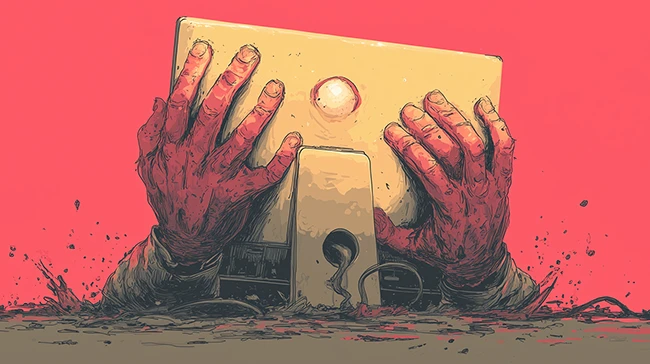
A ransomware attack against a hospital makes headlines, while attacks on the rest of the ecosystem around it tend to stay quiet despite doing damage that can be just as bad.
Flare researcher Assaf Morag analyzed ransomware leak-site activity tied to healthcare organizations in the EMEA region between 2024 and 2026, and found that ransomware groups are going after the entire healthcare supply chain.
The dataset covers hospitals and clinics, telemedicine providers, diagnostic laboratories, pharmacies, rehabilitation services, healthcare software vendors, staffing agencies, medical equipment suppliers, and public health agencies.
Some of these organizations are targeted directly because disruption puts patient safety on the line. Others are hit as a stepping stone toward bigger, better-defended targets further down the chain, such as hospitals that depend on them for records, equipment, or connected systems.
Flare counted 14 threat actor groups going after EMEA healthcare targets, among them Qilin, LockBit 3.0, RansomHub, DragonForce, Gunra, NightSpire, and 3AM.
(Source: Flare)
Some of the notable incidents are:
- American Hospital Dubai: 40 TB and 450 million patient records claimed
- Spire Healthcare: 1.8 TB claimed
- NRS Healthcare: 578 GB claimed
- Genie Healthcare: 110 GB claimed
Kazu: a smaller group with a new target list
Kazu is a smaller ransomware and extortion gang that emerged in mid-2025, going after government and public-sector victims at first. Flare spotted it through an attack on an Italian telemedicine provider, then found a string of new victim postings, all healthcare, all outside the original EMEA dataset, located in Latin America instead.
That led to a closer look at 848 records Flare pulled from ransomware sites, hacker forums, and messaging platforms. Government still makes up Kazu’s largest victim group, with healthcare close behind.
“Although this does not conclusively prove an intentional targeting strategy, it strongly suggests a growing interest in healthcare organizations and healthcare-related data,” Morag noted.
What these attacks cost
In February 2024, ALPHV/BlackCat broke into Change Healthcare, one of the largest healthcare payment processors in the US, and stole over six terabytes of health and financial data.
The disruption hit an estimated 40% of US medical claims processing and delayed billing, reimbursements, and prescriptions nationwide. Change paid a $22 million ransom; total damages reached about $2.87 billion once operational and reputational losses were counted in.
The Coalition for Health, Ethics & Society counted 289 cybersecurity incidents hitting EU healthcare in 2024, more than any other essential sector, with an average major incident costing about €300,000 and a cumulative annual impact in the billions.
Security vendor StationX puts the average healthcare breach at about €10.3 million, with recovery alone averaging €2.4 million and downtime running around €1.75 million per day.
Legacy systems and a geopolitical angle
The European Parliamentary Research Service and the Coalition for Health, Ethics & Society assessments argue that ransomware against hospitals has grown into an operational and geopolitical threat to European resilience, on top of being a criminal problem.
“Both reports highlight that many European healthcare institutions continue to rely on legacy technologies and fragmented IT environments that complicate patching, monitoring, and recovery operations. These institutions remain structurally vulnerable due to delayed implementation of security regulations, workforce shortages, and the rapid expansion of interconnected medical technologies,” added Morag.
Their conclusion lines up with the cost data: operational disruption, more than the ransom itself, drives the price tag of healthcare ransomware in Europe.