A laptop used to repair a car may seem like an unlikely target, but for cybercriminals it could be a goldmine, providing access to an automaker’s systems. As highlighted by new research from automotive cybersecurity firm Upstream’s AutoThreat team, hackers are using fake GitHub repositories to trick technicians, repair shops, and researchers searching for vehicle diagnostic software and related tools.
Fake Diagnostic Tools on GitHub
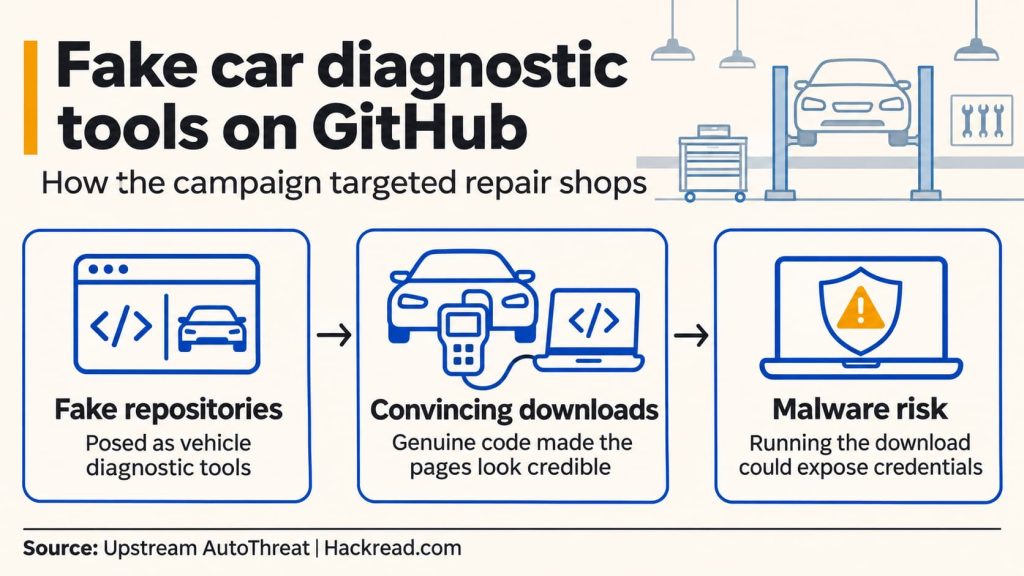
AutoThreat team discovered at least 16 fake GitHub repositories posing as automotive diagnostic software, all appearing within two weeks in early November. These fake projects imitated diagnostic software from automakers in Europe, North America, and Asia. Some also copied aftermarket repair tools and Electronic Control Unit (ECU) coding utilities that are used to program vehicle computers.
What makes this deception unique is that the repositories contained real open-source automotive material inside them, including Controller Area Network (CAN) files and Unified Diagnostic Services (UDS) libraries. This is a clever trick to make a project seem genuine to someone looking for a particular tool.
Another layer of deception was added by AI-generated README files, which were stuffed with repair-related search terms. This step was included to make the projects rank higher in search engine results.
How the Fake Repositories Delivered Malware
The actual danger was hidden in what users were asked to do next, as instead of downloading a ready-made executable, they were told to build the software or run installation commands. This could be the attacker’s way to install infostealer malware onto a computer, Upstream notes in the blog post shared with Hackread.com.
A suspicious 404.html file was another crucial link in this infection chain. It copied GitHub’s “Loading package…” screen and contained a hidden JavaScript that contacted a remote server, redirecting the browser to another site that could be hosting the malware.
The most worrying aspect of this research is the amount of sensitive data these computers can store, considering that repair shop computers often stay logged into automaker portals and so they can store passwords, browser cookies, single sign-on (SSO) tokens, and certificates used by diagnostic tools.
Session tokens are especially valuable to attackers. Someone who steals them can reuse an existing session without entering a password or completing another multi-factor authentication (MFA) check, thereby getting access to vehicle identification number (VIN) histories, warranty records, or connected-vehicle systems.
A Growing Problem on GitHub
Upstream described this approach as an attack on “developer and technician trust in public code repositories.” But this is nothing new, as Hackread.com has repeatedly reported on fake GitHub projects distributing malware.
In a recently discovered SolanaCry malware delivery attack, a fake Solana project was used to trick AI coding agents into installing malware. Another campaign used fake ChatGPT and Claude apps to spread Yoba malware through GitHub. In the latest case, the difference is just that the GitHub lure is related to automotive software and targets a different category of users.
Although Upstream has not reported any confirmed access to these systems, the findings are still alarming, highlighting that a fake diagnostic tool downloaded from GitHub could put the accounts used by repair shops at risk.
GitHub removed the reported repositories following Upstream’s findings. Researchers are now urging technicians to be wary of diagnostic software offered through public GitHub projects, especially when installation involves running unfamiliar scripts.