A newly disclosed Bazuka, a modular Android banking Trojan that captures banking credentials and intercepts SMS verification codes while using large language models (LLMs) to help operators prioritize compromised devices.
ThreatFabric discovered the framework in late October 2026 while investigating an incident involving a near-field communication (NFC) card relay application.
Bazuka combines a dropper or downloader, a core payload, and 23 modules. The analyzed framework lacked an automated payment function. Instead, its AI integration supports operator decisions about which infected devices to investigate, a use also seen in RATHat’s AI-assisted victim scoring.
New AI-Powered Bazuka Banking Trojan
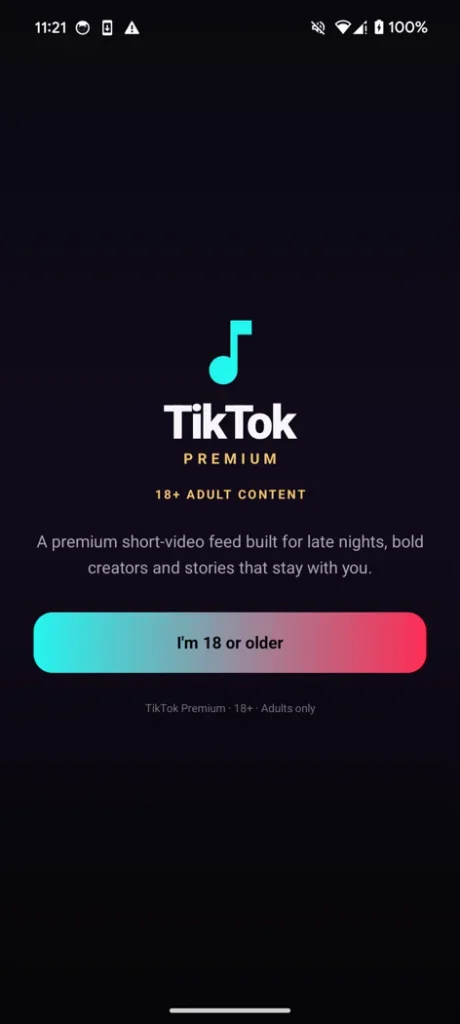
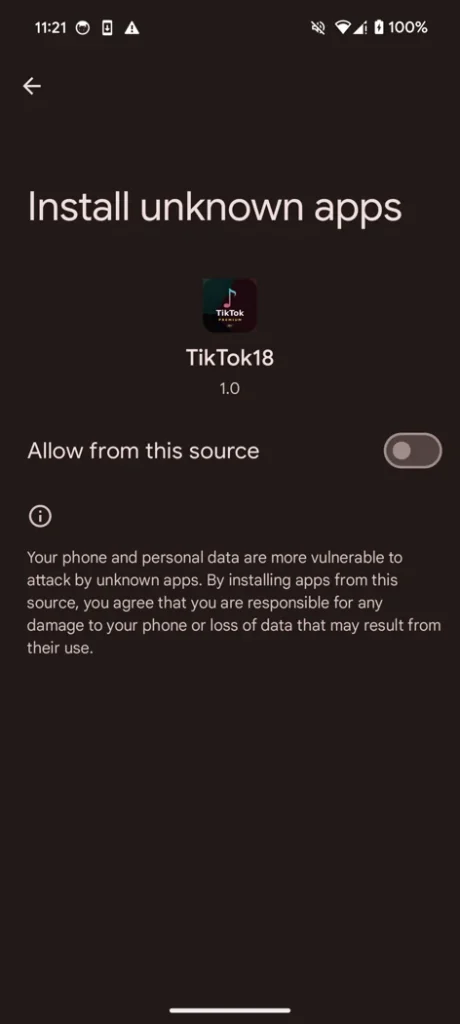
ThreatFabric identified two delivery paths. One sample masqueraded as a TikTok18+ adult-content app, requested permission to install apps from outside the official store, and retrieved a separate Android package (APK).
A second sample downloaded the core payload directly and loaded the NFC module used in the observed relay attack. The operator panel contained affiliate accounts for recruiting victims and builder settings for generating APKs with minimal manifest permissions.
ThreatFabric interpreted those settings as evidence that the developers intended to distribute Bazuka through Google Play, but found no evidence they had done so.
Bazuka loads its core and additional modules as Dalvik Executable (DEX) bytecode through Android’s InMemoryDexClassLoader. This lets the framework load campaign-specific modules without bundling every capability in the initial APK.
The core fingerprints infected devices and separates command-and-control traffic from data exfiltration across two WebSocket channels, both protected by ChaCha20-Poly1305 authenticated encryption.
The data channel carries captured material, including screen streams. Researchers also identified abuse of Android’s Accessibility Service and Android Debug Bridge (ADB) to acquire permissions and control the device, but did not demonstrate that Bazuka’s modules persist after the host app is removed.
Bazuka’s input_recorder module looks for passwords and card numbers in typed input and logs text while a targeted app is in the foreground.
Other modules read SMS messages, intercept one-time verification codes, and collect lock-screen PINs, passwords, or patterns.
Beyond the credential-phishing overlays used by RemControl, Bazuka can display a previously captured home-screen or lock-screen image as an overlay rather than relying solely on fabricated login pages. The framework also supports remote screen viewing and device interaction.
The LLM integration sits in the operator panel, not in the credential collection modules. The panel supports locally hosted models and models accessed through an API.
Operators can query an infected device’s status or request a score reflecting its value as a target, a pattern also seen in ArcticRAT’s AI-assisted financial triage.
ThreatFabric could inspect Bazuka’s frontend without authenticating, but the backend required authentication to access victim data. Researchers found no evidence that a model independently stole credentials or executed transactions.
For incident responders, the central risk is that one compromised handset can expose both a banking password and the SMS code meant to protect the account.
The observed NFC relay adds a separate fraud path: investigators should look for suspicious contactless card transactions as well as signs of bank account takeover.
Join 16,000+ SOC teams using ANY.RUN to streamline threat investigations and reduce manual effort. Explore for your team